


 Osa Commerce

Unlock new levels of efficiency and profit by breaking down technology silos in logistics and embracing unified commerce through collaborative digital platforms.
The Hidden Costs of Fragmented Technology in Logistics
Most third-party logistics (3PLs) and brands are leaking money without realizing it—and fragmented technology is usually the culprit.
When supply chain operations rely on disconnected systems and siloed data, a cascade of hidden costs is not uncommon. Manual workarounds, redundant data entry, and increased error rates—each compounding operational inefficiencies—result in delayed order fulfillment, inventory inaccuracies, and ultimately lost revenue.
As brands struggle to meet consumer expectations across omnichannel commerce, siloed operations create bottlenecks, communication issues, and make it difficult to respond swiftly to disruptions or demand spikes.
Multiply that across multiple clients, channels, and fulfillment nodes, and the hidden costs spike quickly:
-
Higher labor spend from manual processes
-
Inventory inaccuracies that lead to outsized safety stock or stockouts
-
Order delays and routing mistakes that erode customer trust
-
Operational bottlenecks between partners due to slow or inconsistent data
-
Lost revenue caused by missed sales opportunities and avoidable fulfillment errors
And in an omnichannel world—where customers expect speed, accuracy, and transparency—these inefficiencies aren’t just inconvenient. They’re expensive.
The inability to access real-time, end-to-end supply chain data restricts proactive decision-making and leaves organizations vulnerable to both missed opportunities and avoidable expenses.
How Unified Commerce Platforms Drive Collaboration
Unified commerce platforms offer a holistic approach that enables both brands and their logistics partners to share critical information seamlessly, fostering greater transparency and trust throughout the entire ecosystem.
By centralizing data and workflows, unified platforms enable stakeholders to collaborate on inventory allocation, order routing, and fulfillment optimization, reducing friction and aligning goals. This collaborative visibility is essential for orchestrating complex omnichannel strategies and delivering consistent customer experiences.
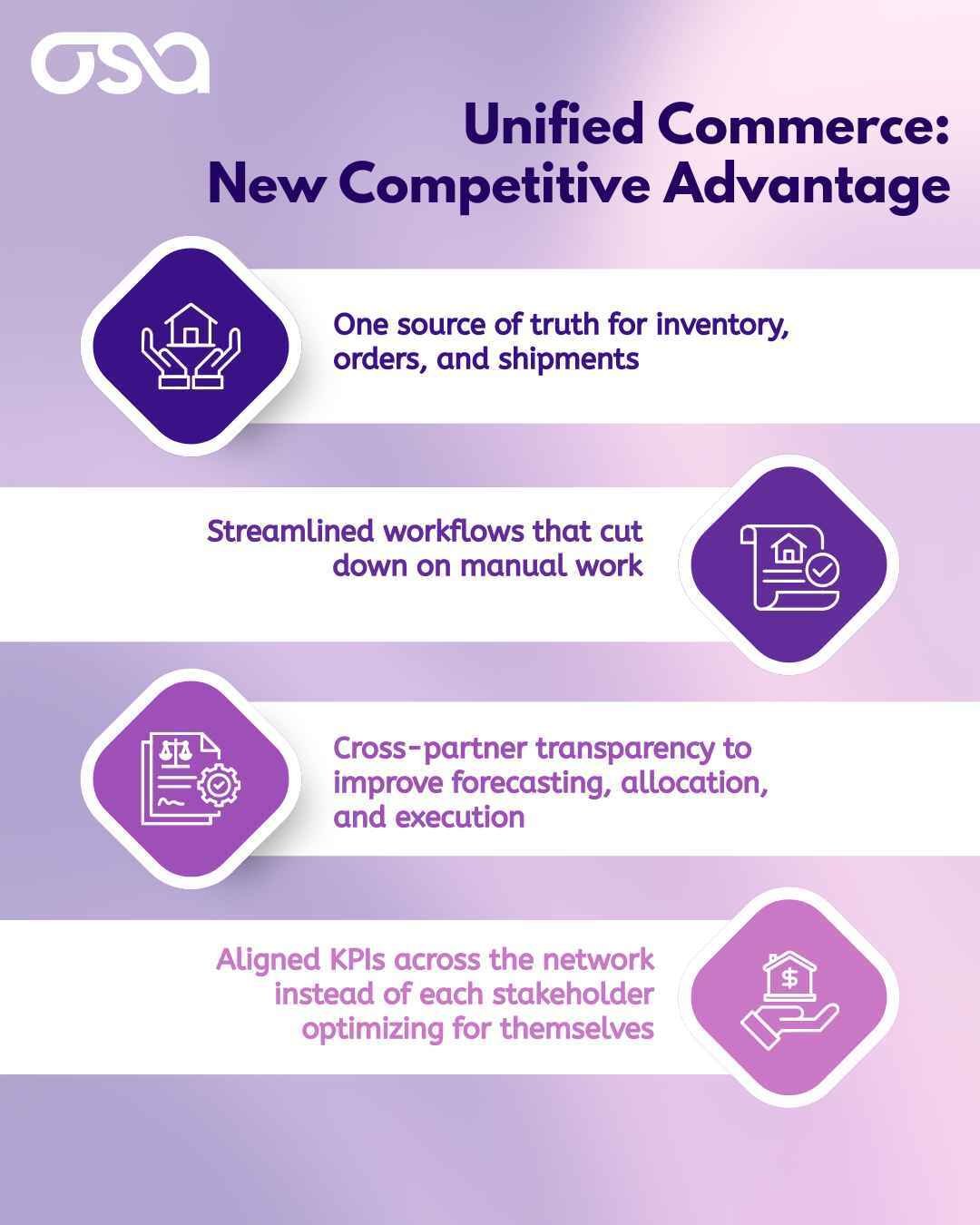
Transforming Operations with Real-Time Data Sharing
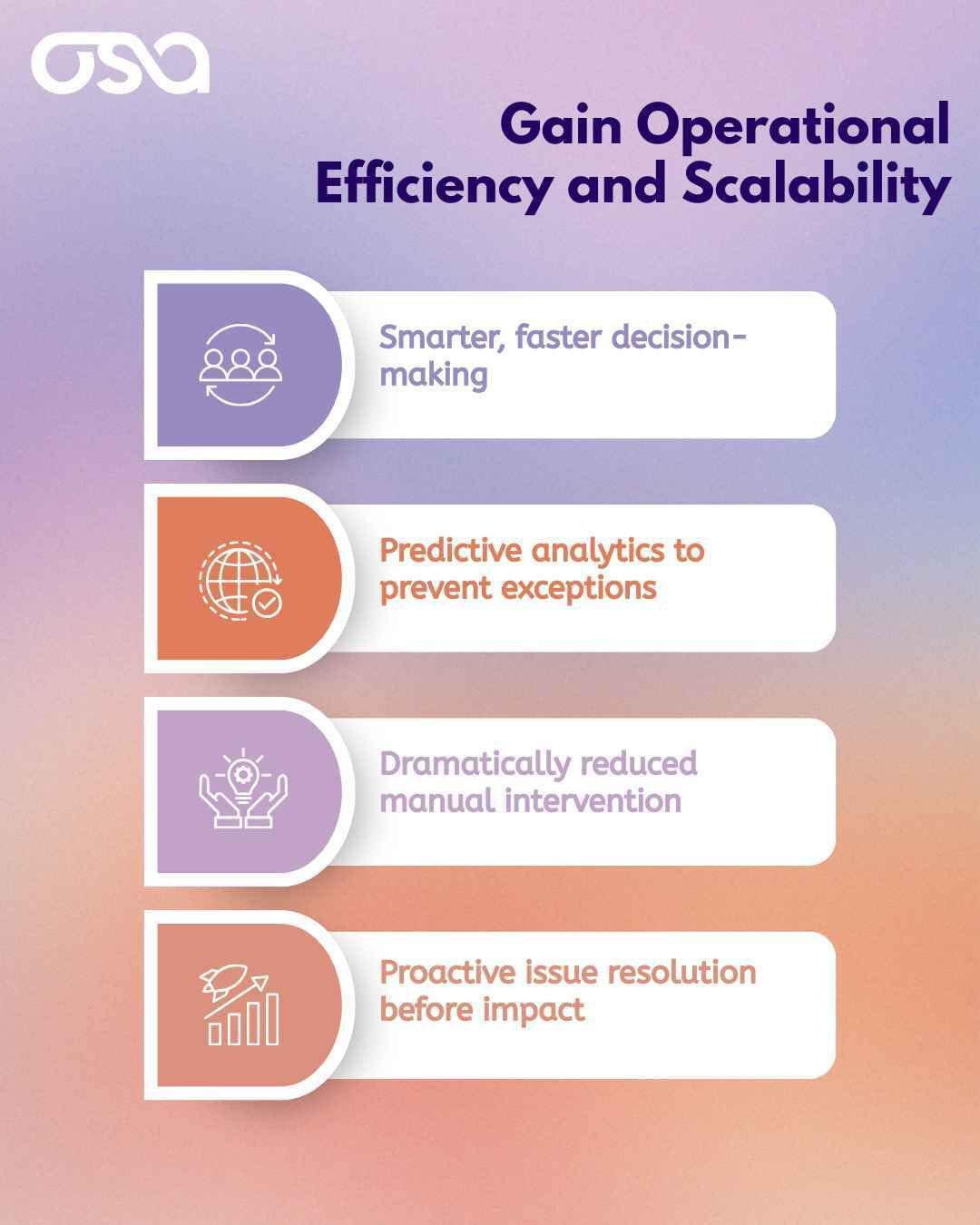
Real-time data sharing is at the core of modern supply chain excellence. But for it to deliver value, brands and their partners must adopt collaborative visibility and unified platforms to achieve a single source of truth—for inventory, orders, and shipments across every node of the network. This empowers teams to make data-driven decisions instantly, from forecasting demand to resolving exceptions before they escalate.
Integrated APIs and cloud-native architectures, including platforms like Osa Commerce enable seamless, secure data exchange between WMS, OMS, Enterprise Resurce Planning (ERPs), marketplaces, and last-mile partners. This not only reduces manual intervention but also accelerates responsiveness, improves accuracy, and supports predictive analytics for continuous improvement.
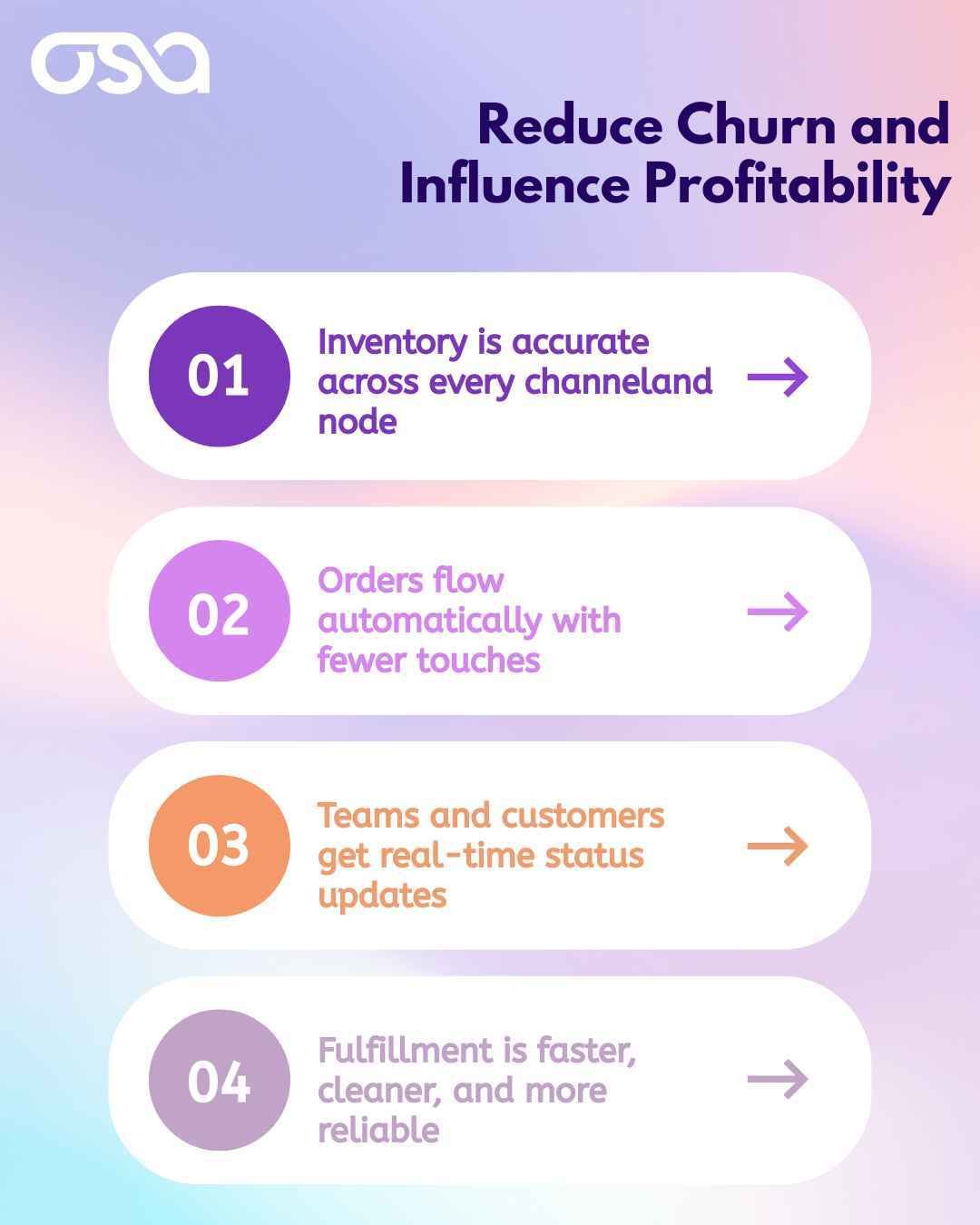
Boosting Customer Satisfaction Through Integrated Solutions
Siloed systems often result in poor customer experiences—ranging from stockouts and delivery delays to lack of order transparency. Integrated solutions address these pain points by synchronizing inventory, automating order flows, and providing real-time status updates to both teams and customers.
Brands leveraging unified commerce platforms can fulfill orders faster, reduce errors, and offer reliable, up-to-date information across all channels. This level of service drives higher customer satisfaction, builds brand loyalty, and directly translates into increased revenue and market share.
How 3PLs and Brands Can Begin the Shift Toward Unified Commerce
The beauty of true unified commerce solutions and platforms, it that you don’t have to rip and replace your entire tech stack. To get the benefits of unified commerce, start with clarity:
- Diagnose Silos: Map where systems, teams, and partners are disconnected. Identify the points where delays, errors, or labor costs spike.
- Prioritize High-Impact Integrations: Focus on the areas that deliver immediate ROI: WMS ↔ OMS, inventory visibility, and carrier or marketplace integrations.
- Adopt Collaborative Visibility: Cloud-native platforms like Osa Commerce make it possible to integrate step-by-step, scaling toward full orchestration without disrupting operations.
- Bring Partners into the Process: Brands, 3PLs, carriers, and marketplaces all benefit when visibility is shared. Align early to avoid missteps later.
- Leverage Automation and Predictive Intelligence: Once real-time data is flowing, automation handles the exceptions—and predictive analytics unlock the next phase of improvement.
Taking the First Steps Toward Unified Commerce in Logistics
Unified commerce doesn’t just streamline operations; it reshapes how brands and 3PLs work together. It creates a more profitable, more scalable, and more resilient logistics ecosystem—one that’s fully equipped for the demands of omnichannel commerce.
Adopting a cloud-native, collaborative visibility platform, like Osa Commerce, allows organizations to start with modular integrations—connecting WMS, OMS, and partner systems—while scaling to full orchestration over time. Engaging stakeholders early, focusing on data security, and leveraging automation are crucial steps to closing the visibility gap and future-proofing supply chain operations in an increasingly omnichannel world.