Your Supply Chain. Your Rules. One Integration Layer.
Osa Zero Integration ManagementTM — Configurable, Resilient, and Built for Scale.
Why 3PLs Are Abandoning Custom Integrations
Osa Zero replaces one-off integrations with configurable integration management to stop the customization trap.
From Code-Driven to Logic-Driven Configuration
Osa Zero flips integration models from code-driven customizations to logic-driven configuration so you can scale and stop being held back by customizations.
Reusable Logic—Not Brittle Code
Osa Zero turns integrations into reusable logic so you can onboard faster, stay upgrade-safe, and scale effortlessly.
Control Your Own Logic
Maintain your own connectors and control your business rules with an API-agnostic integration layer that already understands how major ERP, Order Management, and marketplace systems work.
Onboard in Weeks — Not Months
Custom integrations are the #1 bottleneck to 3PL growth, driven by "one-off" projects. Osa Zero uses a unified data model to "plug in" data into a proven architecture.
Built to Survive Platform Changes
Custom and homegrown integrations are risky—for "upgrade-safe" system designs, API updates, schema changes, or custom code failures.
A Fundamentally Better Operating Model for Growth.
Effortless Integrations. Enhanced Efficiency.
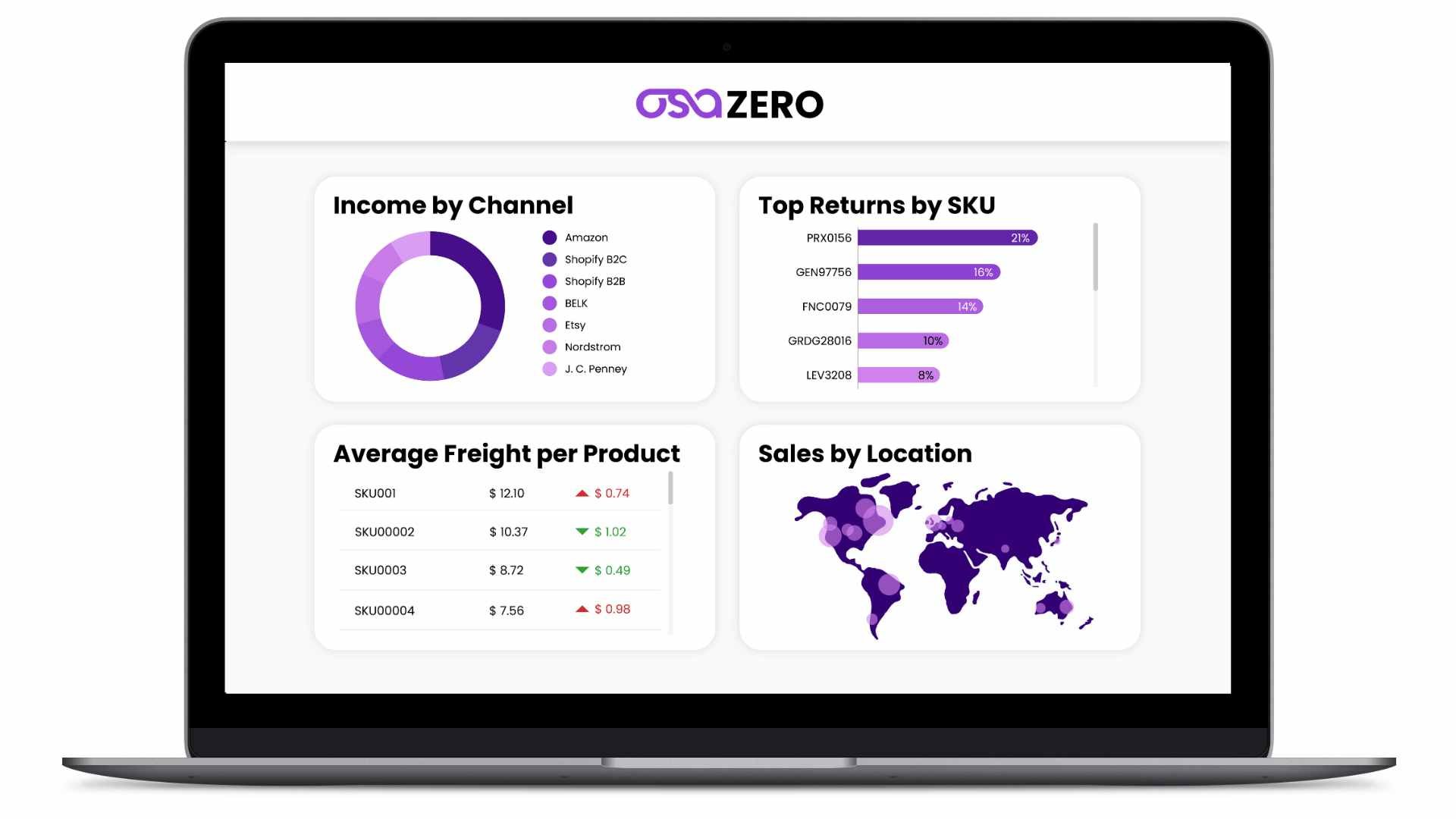
Real-Time Visibility Without a Developer in the Room.
Easily connect to disparate systems, from ERPs to marketplaces, shopping carts, e-commerce platforms, or demand channels for a comprehensive view of operations.
When integrations live in custom code, they become black boxes. Osa Zero offers:
Self-Service control to remove blind spots
Direct visibility and error management without scripts
Update rules—no tickets and no need to deploy code
Maximize Your Supply Chain
Less time coding. More time onboarding. Zero dependency on custom work.
Tech-Agnostic "Zero" Integration Layer.
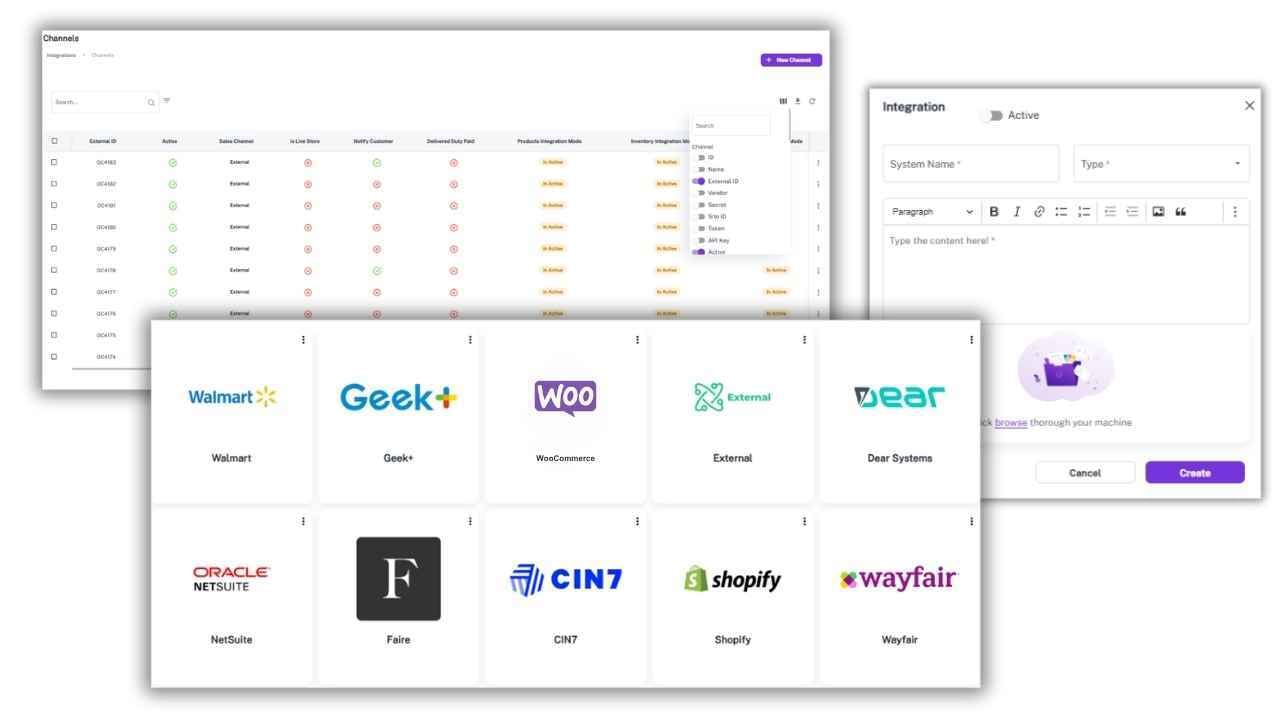
440+Preset Integrations. With a click of a button.
Eliminate silos, stay connected, and confidently unlock the full potential of your logistics operations. Easily view, manage, and control your supply chain and e-commerce transactions from procurement to last mile.
Onboarding reduced to 4–6 weeks
Faster “yes” to new customers
Parallel onboarding of multiple brands without IT bottlenecks
How Can Osa Solve Your Supply Chain Integration Costs?
Osa ZeroTM connects your business to omnichannel marketplaces, carriers, and supply chain tools. Learn how we help Supply Chain Executives, CIOs, and Transportation Executives.
Revenue Growth
Drive top-line sales growth by swiftly responding to market trends and ensuring optimal consumer demand, facilitated by an integrated supply chain ecosystem.
Improved Margins
Enhance product mix and maintain gross margin rates by leveraging integrated data on one dashboard, enabling better decision-making and minimizing reliance on clearance markdowns.
Cost Savings
Optimize inventory positions and enhance visibility to lower logistics costs thought integrated data, which supports more accurate inventory forecasting and management.
Meet C-Suite Expectations
Gain access to game-changing data to share with Chief Information, Procurement, Operations, and Supply Chain Officers.
Improve Transportation Costs
Leverage AI-driven analytics and predictive modeling to optimize network performance, achieving savings and efficiency through seamless integrations.
Optimized Operations
Transform operations with advanced routing and container optimization via API integrations, factoring in inventory, orders, and availability to revolutionize efficiency.
Connect Your Ecosystem
Access a digitized ecosystem offering dynamic capacity and pricing via an integrated and connected network that reduces data chaos and enhances operational efficiency.
Partner with Logistics Execs
Easily collaborate and partner with transportation and logistics executives for faster order processing and parcel delivery to remain competitive and meet customer needs.
For supply chain businesses, integration management is essential for optimizing operations. It ensures seamless connectivity between systems, processes, and technologies to enhance transparency and efficiency. Key aspects include:
Systems Integrations: Connect supply chain tools like Warehouse Management (WMS), Order Management (OMS), Transportation Management (TMS), and e-commerce platforms to streamline inventory and logistics.
API Integrations: Leverage APIs to connect shopping carts, marketplaces, and carriers, enabling real-time data exchange and end-to-end supply chain visibility.
Data Integrations: Share real-time data across platforms for accurate, standardized information, improving partner collaboration.
Technology Integrations: Incorporate IoT devices, RFID, barcodes, and scanners for precise inventory tracking and shipment monitoring.
Partner Integrations: Standardize communication and strengthen partner relationships using supplier portals and EDI integrations.
Effective integration management drives supply chain transparency, efficiency, and scalability.
Osa Commerce has multiple prebuilt adapters for platforms with standard data inputs (Shopify, WooCommerce, Ebay, etc.). We have also connected to multiple WMS, ERP, TMS, Automation, and Robotics Systems through our OsaZero Integration Management layer.
We are connected to multiple carrier services that offer rate shopping from multiple carriers and accounts and through multiple manifesting solutions (e.g., EasyPost, TechShip, FreightClub) and direct carrier integrations (e.g., CH Robinson).
Accelerated Revenue = Faster Revenue
Request a demo of Osa Zero Integration Management for supply chains.
Unlock growth and limitless visibility for a seamless customer experience for brands, retailers, 3PL providers, and everyone in between.