


 Osa Commerce


Traditional warehouse management systems can no longer keep pace with the demands of modern omnichannel commerce—discover how unified commerce platforms transform disconnected operations into intelligent, scalable supply chain ecosystems.
In this guide
In this guide
Beyond Warehouse Management Systems
Warehouse Management Systems (WMS) excel at managing inventory within four walls. However, they struggle to meet the requirements of modern omnichannel commerce due to fragmented operations.
The need for real-time inventory visibility, flexible fulfillment options, and rapid order processing across multiple channels simultaneously requires more than traditional WMS solutions —systems that were not architected to handle this level of connectivity.
Without unified data standards and real-time synchronization across systems, inventory accuracy deteriorates, leading to stockouts, oversells, and customer dissatisfaction. Add to that a lack of native integration capabilities with the broader commerce ecosystem, and data silos between warehouse operations, order management, transportation, and customer-facing channels become the norm rather than the exception.
The solution? A unified commerce platform.
The Limitations of Traditional WMS
Unified Commerce Platforms represent a fundamental shift in supply chain architecture—moving from isolated, function-specific systems to an integrated ecosystem where data flows seamlessly across all operational nodes. Unlike traditional WMS implementations, where extensive custom integration is required to connect with adjacent systems, unified commerce platforms provide pre-built connectivity to systems such as ERP systems, order management, transportation management tools, ecommerce platforms, and retailer EDI networks. Using a tech-agnostic approach eliminates the integration burden that plagues supply chain operations.
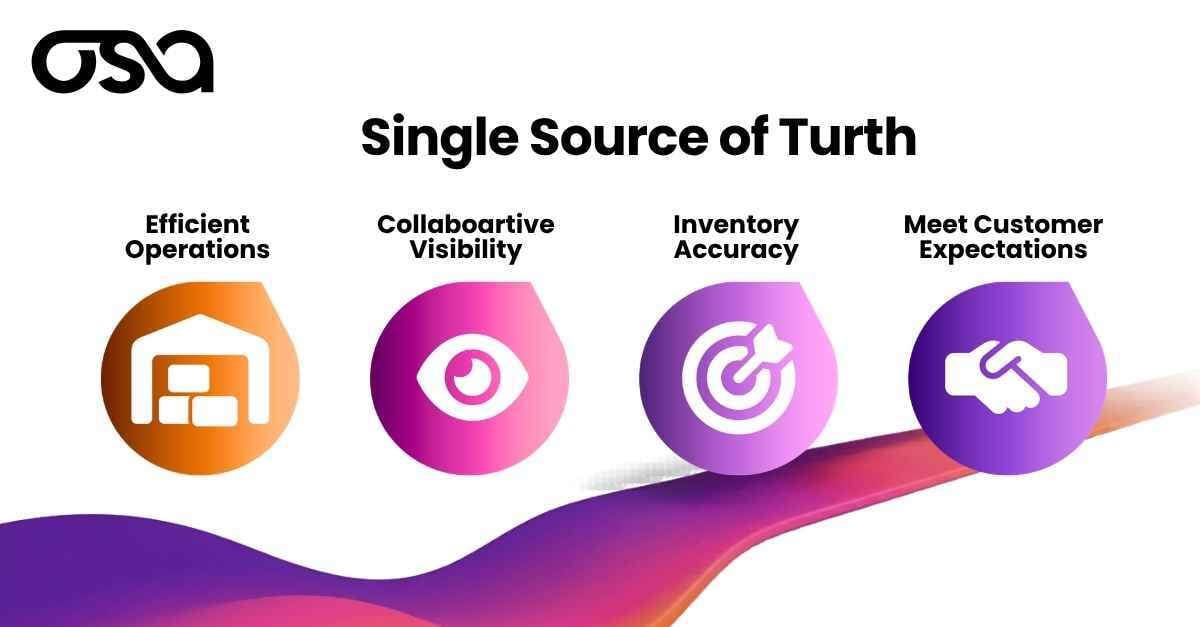
The ability to create a single source of truth is the transformative power of Unified Commerce Platforms. Unfortunately, with legacy systems and traditional WMS implementations, many supply chains face these key challenges:
-
Lack of Visibility and Connectivity
-
Siloed systems and data sources across different supply chain functions (e.g., procurement, inventory, transportation, customer experience).
-
Limited real-time visibility into inventory levels, order status, and supply chain performance.
-
Difficulties in coordinating and collaborating with suppliers, logistics partners, and customers.
-
-
Data Fragmentation and Inconsistency
-
Disparate data sources and formats across various systems and stakeholders.
-
Challenges in reconciling and consolidating data for accurate decision-making.
-
Lack of a single, unified view of supply chain information.
-
-
Complexity and Dynamism
-
Increasing complexity in global supply chains, with multiple suppliers, distribution channels, and customer touchpoints.
-
Rapidly changing market conditions, consumer preferences, and regulatory requirements.
-
Difficulty in adapting to fluctuations in demand, supply chain disruptions, and other unpredictable events.
-
-
Operational Inefficiencies
-
Suboptimal inventory management, leading to stockouts or excess inventory.
-
Inefficient order fulfillment and transportation logistics lead to delayed deliveries and higher costs.
-
Manual, labor-intensive processes that are prone to errors and delays.
-
-
Evolving Customer Expectations
-
-
Rising demands for faster, more flexible, and more personalized delivery options.
-
Increased focus on sustainability and environmental responsibility in supply chain practices.
-
Expectations for seamless omnichannel experiences and real-time visibility into order status.
-
When warehouse operations, order processing, customer service, and financial reconciliation all draw from the same real-time data foundation, operational efficiency improves dramatically.
Real-Time Visibility and AI-Powered Decision Making
Real-time visibility has evolved from a competitive advantage to a fundamental operational requirement. Unified Commerce Platforms equipped with collaborative visibility capabilities provide comprehensive tracking and monitoring across the entire supply chain—from inbound shipments and warehouse receiving through order fulfillment and last-mile delivery. This transparency extends beyond simple location tracking to include predictive analytics that identify potential disruptions before they impact customer orders, enabling proactive resolution rather than reactive firefighting.
The integration of artificial intelligence (AI) transforms visibility from passive monitoring into active intelligence. AI helps analyze patterns across millions of transactions to optimize inventory placement, predict demand fluctuations, and recommend operational adjustments. For warehouse operations, this means smarter pick-path optimization, automated putaway decisions based on velocity and characteristics, and predictive maintenance scheduling to prevent costly equipment downtime. At the network level, AI algorithms continuously evaluate the optimal fulfillment location for each order based on real-time inventory availability, carrier performance, delivery timeframes, and cost considerations.
Prescriptive analytics represent the next evolution beyond descriptive and predictive capabilities. Rather than simply alerting operators to potential issues, AI-driven platforms can autonomously execute corrective actions within defined parameters.
Scalable Order Orchestration and Automated Routing
Unified Commerce Platforms provide sophisticated order orchestration engines that evaluate every order against a comprehensive set of business rules, inventory availability, capacity constraints, and cost parameters to determine the optimal fulfillment strategy. This goes far beyond simple inventory allocation, encompassing split shipments, drop shipping, store fulfillment, and hybrid strategies that balance speed, cost, and customer experience.
Automated routing capabilities eliminate the manual decision-making that creates bottlenecks and errors in traditional order management approaches. When orders enter the system, intelligent routing algorithms instantly evaluate all available fulfillment options and assign work to the appropriate locations based on configurable priority logic. For brands managing both direct-to-consumer and wholesale channels, this orchestration ensures that retail commitments are protected while maximizing D2C fulfillment efficiency. For 3PL providers operating multiple facilities, automated routing optimizes capacity utilization across the network while maintaining client-specific service level agreements.
How Unified Commerce Platforms Bridge the Gap Between Disconnected Systems
Operational resilience requires more than robust individual systems like WMS—it demands an architecture that adapts to disruption, integrates diverse technologies, and enables collaboration across organizational boundaries. Tech-agnostic Unified Commerce Platforms provide this foundation by supporting integration with existing enterprise systems regardless of vendor or technology stack. Rather than replacing functioning systems, Unified Commerce Platforms create a connectivity layer that unifies disparate platforms while preserving existing investments. This approach dramatically reduces implementation risk and accelerates time to value compared to traditional rip-and-replace strategies.
Collaborative networks extend this integration philosophy beyond internal systems to encompass relationships with trading partners. Modern supply chains depend on seamless coordination between brands, retailers, 3PLs, carriers, and suppliers. Unified Commerce Platforms facilitate this collaboration by providing shared visibility, standardized communication protocols, and automated workflow orchestration across organizational boundaries. When brands and their 3PL partners operate from the same real-time data foundation with consistent business rules, the entire network becomes more agile and responsive. Retailers benefit from suppliers who ship clean with built-in compliance enforcement, leading to faster payments and stronger partnerships.
Layer 1: Intelligent Demand Forecasting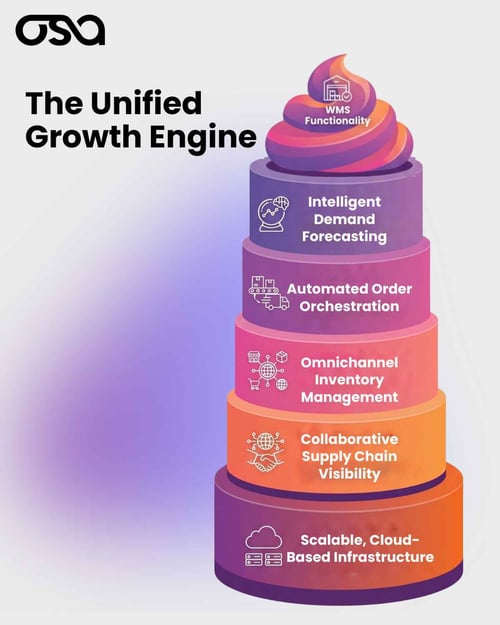
Leverage advanced AI and machine learning algorithms to analyze historical data, market trends, and real-time demand signals. Enable highly accurate demand forecasting to optimize inventory levels, reduce stockouts, and minimize excess inventory.
Layer 2: Automated Order Orchestration
Seamlessly manage order orchestration capabilities across the entire order fulfillment process, from receipt to delivery. By automating order routing, carrier selection, and shipment tracking, the Osa Unified Commerce Platform ensures faster, more efficient order fulfillment, improving customer satisfaction and reducing operational costs.
Layer 3: Omnichannel Inventory Management
Unify inventory management for a holistic view of inventory across all sales channels, including brick-and-mortar stores, e-commerce platforms, and third-party marketplaces. This enables businesses to optimize inventory allocation, minimize stockouts, and improve overall supply chain resilience.
Layer 4: Collaborative Supply Chain Visibility
Improve supply chain visibility to collaborate with partners, suppliers, and customers in real-time. By sharing data, tracking shipments, and proactively addressing issues, the platform fosters greater transparency and enhances supply chain agility.
Layer 5: Scalable, Cloud-Based Infrastructure
Build on a scalable, cloud-based infrastructure to adapt to changing market conditions and seasonal fluctuations without the need for costly hardware upgrades or IT maintenance. This flexibility ensures that businesses can focus on their core operations while the platform handles the technological complexities.
Measure Unified Commerce Success
The cumulative impact of unified commerce architecture manifests in measurable business outcomes.
-
3X times return on investment through reduced inventory overhead and improved shipping accuracy
-
99% inventory accuracy to eliminate costly stockouts and oversells
-
20% logistics revenue increases enabled by operational efficiency
-
Dramatic reductions in labor costs and IT overhead
These results stem from eliminating the manual work, data reconciliation burden, and error correction that consume resources in disconnected environments. By creating a truly unified ecosystem where people, processes, and data connect seamlessly, supply chain operations are more efficient and fundamentally more resilient.