


 Osa Commerce

E-commerce brands are facing unprecedented challenges as operational complexity surges, threatening profitability and long-term growth.
The Hidden Costs of E-Commerce Fragmentation
Modern e-commerce has evolved into a multi-channel, multi-model ecosystem—incorporating Made-to-Order, Made-to-Stock, Drop-Ship, and more—across marketplaces, social platforms, and direct-to-consumer portals. While this diversity creates growth opportunities, it also introduces a staggering level of operational fragmentation.
Each channel and fulfillment model comes with its own inventory, tracking, and fulfillment rules. As brands juggle disparate spreadsheets and disconnected systems, they face mounting risks: real-time visibility is lost, errors multiply, and stockouts or overstocks become common—especially during peak periods. The resulting inefficiencies silently erode profit margins and undermine customer satisfaction.
Why Siloed Systems Undermine Brand Success
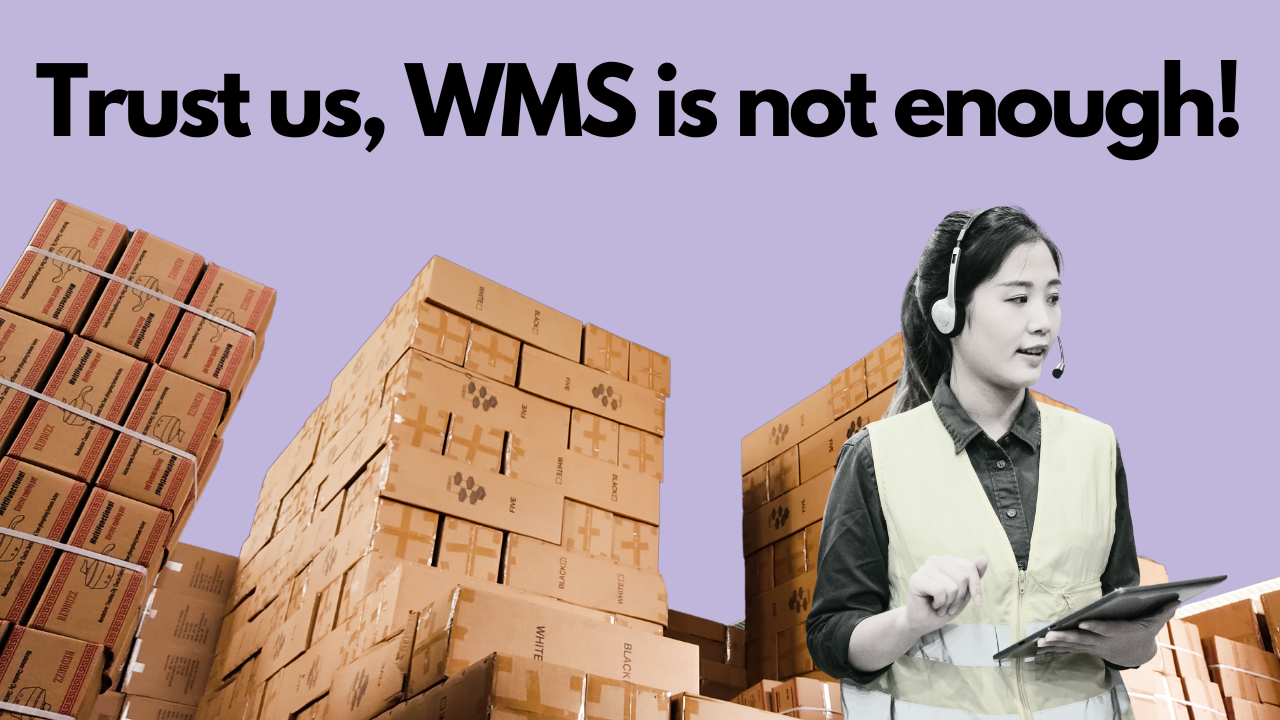
Legacy approaches to supply chain management are built on silos—spreadsheets, standalone systems such as WMS and OMS, or ad hoc integrations. This patchwork foundation cannot deliver the speed or consistency required in today’s high-velocity commerce environment.
Disconnected tools mean that inventory data is often outdated, order processing is prone to failure, and fulfillment workflows break down under pressure. Manual intervention increases, amplifying the risk of human error and reducing the ability to respond to demand spikes. In this environment, brands struggle to scale, innovate, or even maintain service levels—leading to lost revenue and diminished competitive edge.


The Rise of Collaborative Visibility in Logistics
Leading brands and logistics providers recognize that resilience and agility stem from connected, collaborative supply chains. Collaborative visibility platforms unify data flows across product lifecycle management, warehouse operations, order orchestration, and last-mile delivery—enabling real-time insights and proactive decision-making.
With collaborative visibility, every stakeholder—from sourcing to fulfillment to customer service—operates from a single source of truth. This transparency reduces bottlenecks, accelerates exception handling, and enables brands to anticipate disruptions before they impact the customer experience.



Orchestrating a Seamless Supply Chain with Unified Platforms
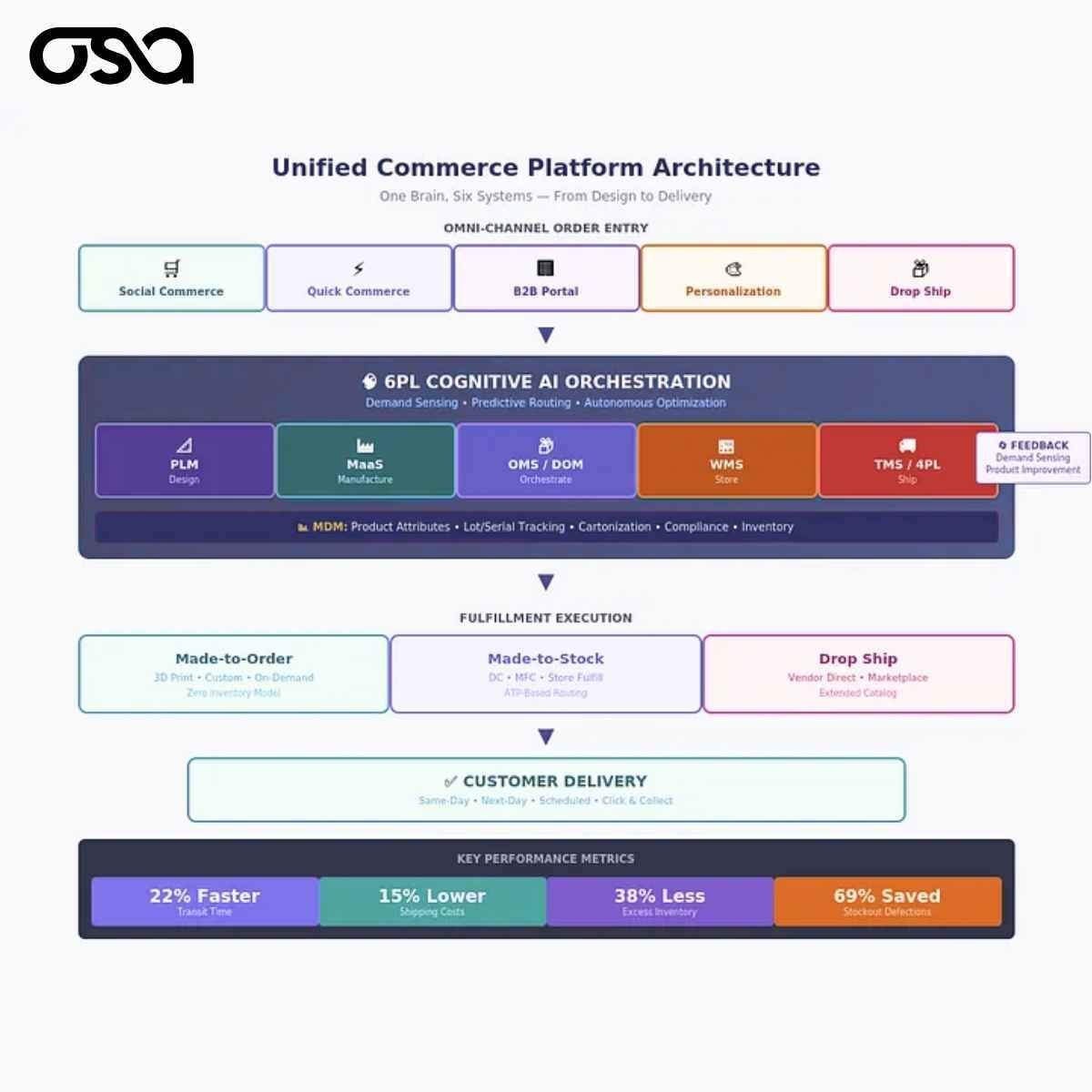
A Unified Commerce Platform serves as the digital brain of the modern supply chain, integrating all critical systems—PLM, warehouse management system (WMS), order mangagement system (OMS), fulfillment, logistics, and analytics—into a single continuous digital thread. This orchestration layer enables brands to intelligently manage inventory across channels, automate order routing, and optimize fulfillment in real time.
The power of unified orchestration is most evident during high-demand periods: inventory levels are synced across all channels, order flows are managed dynamically, and fulfillment adapts to shifting constraints. Automation replaces manual work, reducing cycle times and minimizing error rates—all while maintaining data security and compliance across every transaction.
Transform Your Supply Chain
Unified Commerce Platforms transform supply chains from linear “chains” into dynamic Value Networks:
- Agile: Respond to demand spikes in hours, not weeks
- Resilient: Multiple nodes mean no single point of failure
- Traceable: Lot/serial tracking from raw material to customer door
- Profitable: Stop losing 69% of stockout customers to competitors

Padhu Raman
CEO and Co-Founder
Osa Commerce
Future-Proofing Brands Through Scalable, Integrated Solutions
As commerce continues to fragment and customer expectations rise, brands must move beyond patchwork solutions. End-to-end platforms, such as the Osa Unified Commerce Platform, provide the scalable, integrated backbone needed to support omnichannel growth, advanced analytics, and AI-driven optimization.
With a unified system, brands gain resilience against supply chain shocks, streamline operations, and unlock new business models—meeting customers wherever they shop, without sacrificing efficiency or control. The future belongs to businesses that embrace integration, automation, and collaborative visibility as the foundation for sustainable, profitable growth.
Speak with an Osa expert to learn more about how we can help transform your supply chain into a "Value Network."