


 Osa Commerce

Disconnected warehouse systems create operational blind spots that threaten omnichannel fulfillment—discover how a connected WMS transforms isolated operations into a unified commerce powerhouse.
Love Your WMS? Let’s Make It Talk.
The Hidden Cost of Disconnected Warehouse Operations
A Warehouse Management System (WMS) is only as powerful as its connections. When a WMS operates in isolation, it creates costly data silos that lead to manual errors, inaccurate forecasts, and stockouts.
The consequences extend far beyond simple inefficiency. Disconnected WMS solutions create data silos that prevent real-time visibility across your supply chain, forcing operations teams to rely on outdated information when making critical fulfillment decisions. Add in the financial impacts of operational blind spots, and the inaccuracies grow:
-
Inaccurate forecasts stemming from fragmented data lead
-
Poor inventory planning, resulting in either costly stockouts that damage customer relationships
-
Excess inventory that ties up working capital
Perhaps most damaging is the fractured customer experience based on broken promises. These scenarios erode customer trust and threaten the competitive advantages that unified commerce operations should deliver.
For third-party logistics (3PL) providers and brands managing multi-node fulfillment networks, disconnected warehouse technology creates compounding challenges. Without real-time connectivity between your WMS and supply chain tech stack, you lack the agility to respond to demand fluctuations or optimize fulfillment routing across distribution centers. When peak season rolls around, this limitation becomes particularly acute, as operational resilience and rapid scaling capabilities drive revenue.
Start Where Your WMS Ends
How Real-Time Connectivity Eliminates Inventory Blind Spots
Real-time connectivity transforms warehouse operations from reactive data repositories into proactive intelligence hubs that drive informed decision-making across your entire supply chain. When your WMS maintains continuous, bidirectional communication with your ERP, CRM, and order management platforms, inventory accuracy improves dramatically. Stock levels, allocation statuses, and fulfillment capacities become instantly visible across all systems, eliminating the dangerous lag time that can lead to overselling and allocation conflicts.
.jpg?width=1200&height=1200&name=Meet%20Osa%20Zero%20(1).jpg)
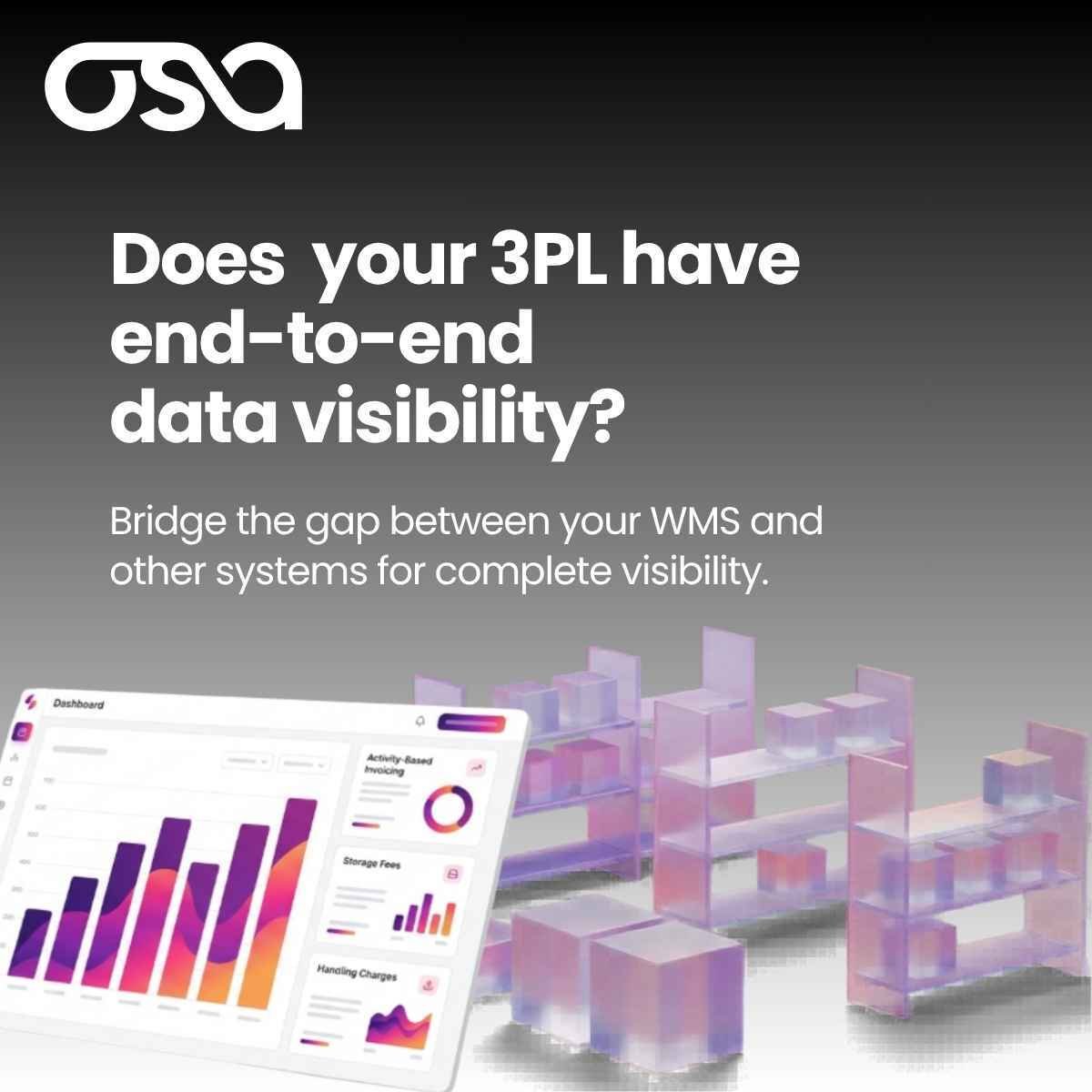
Comprehensive supply chain visibility to remove blind spots is possible. By replacing one-off connections with a configurable integration platform for your WMS, you gain unified dashboards that track order status, shipment progress, and performance metrics in real time across all fulfillment nodes. With full transparency, logistics managers can identify bottlenecks, optimize labor allocation, and make data-driven decisions that improve throughput without sacrificing accuracy. For 3PL providers managing multiple client operations, visibility creates opportunities for resource sharing and efficiency gains that directly impact profitability.
Bridging the Gap With Osa Zero
Complete Visibility from Your WMS to Order Management to Fulfillment
Osa Zero Integration Management serves as the backbone that unifies your WMS and other systems, such as Salesforce, NetSuite, and hundreds of other platforms in your technology stack. Rather than building and maintaining brittle point-to-point connections, Osa Zero creates a scalable integration architecture that adapts as your business grows and your technology requirements evolve. The platform's 440+ turnkey connections accelerate deployment timelines while reducing the technical complexity that traditionally makes system integration projects expensive and risky.
One of the most critical connections for 3PLs is the integration between warehouse management and order management systems. When these platforms operate independently, order orchestration becomes manual and error-prone, requiring constant intervention to route orders correctly, manage exceptions, and maintain accuracy across fulfillment workflows. A unified integration framework eliminates these friction points by enabling automated order routing based on real-time inventory availability, fulfillment capacity, and carrier performance metrics.
Building a Scalable Foundation for Better Margins
Why wait to grow revenue?
As commerce operations expand across multiple distribution centers, third-party logistics partners, and fulfillment models, the technology foundation must scale without creating additional operational complexity. A connected WMS architecture provides this scalability by establishing a unified data model and orchestration layer that extends seamlessly across all fulfillment nodes. Whether you're operating company-owned warehouses, partnering with specialized 3PL providers, or implementing hybrid fulfillment strategies, the connected platform maintains consistent visibility and control.
Osa Zero Integration Management helps 3PLs accelerate revenue, improve onboarding processes, and control their own logic and automated rule conversions that translates retailer requirements into executable workflows. What traditionally required months of custom development and testing now happens in weeks, enabling faster market expansion and more agile responses to competitive opportunities.
.jpg?width=1200&height=1200&name=Connect.%20Unify.%20Optimize.%20Trust.%20%20(1).jpg)
Connected and collaborative technology not only enhances long-term operational efficiency but also fosters strategic agility. As your business model evolves—whether you're exploring new fulfillment strategies, entering fresh markets, or integrating acquisitions—our unified commerce platform adapts seamlessly, eliminating the need for costly system replacements or disruptive migrations.
For supply chain leaders balancing current needs with future growth, our scalable foundation provides immediate returns on investment and a lasting competitive edge. Let's embark on this exciting journey together!