


5 min read

In this guide
Key Takeaways
- Real-time inventory visibility across every warehouse prevents backorders before the holiday rush peaks.
- AI demand forecasting prepares you for last-minute bulk order surges.
- USPS recommends Dec. 17–19, 2026 send-by dates and FedEx and UPS add peak surcharges, so plan carrier cutoffs early.
- Retailers expected 17% of 2025 holiday sales to be returned, and 2026 is likely to be even higher, so prepare returns capacity now.
- One connected platform keeps holiday fulfillment costs in check.
Holiday fulfillment keeps getting bigger, and your logistics have to keep up. Adobe forecasts $275.1 billion in US online sales from Nov. 1 to Dec. 31, 2026, up 6.7% from the $257.8 billion Adobe tracked in 2025.
Simplify your holiday logistics with strong 3PL coordination and supply chain technology. Real-time visibility and demand forecasting, backed by cost-saving integrations, can transform your holiday fulfillment during the busiest season.
In this guide
Planning for the Holiday Inventory Chaos: "Where's My Sleigh?!"
The holiday rush exposes every inventory blind spot. As it begins, managing inventory across multiple warehouses can feel like searching for a single burned-out Christmas light in a tangled string. This chaos leads to backorders and lost sales, and it sends unhappy customers to competitors. However, with a Warehouse Management System's (WMS) real-time visibility software, you can track every product across all your warehouses in one view. This technology shows you exactly where each item is, so you can skip the frantic sleigh search.
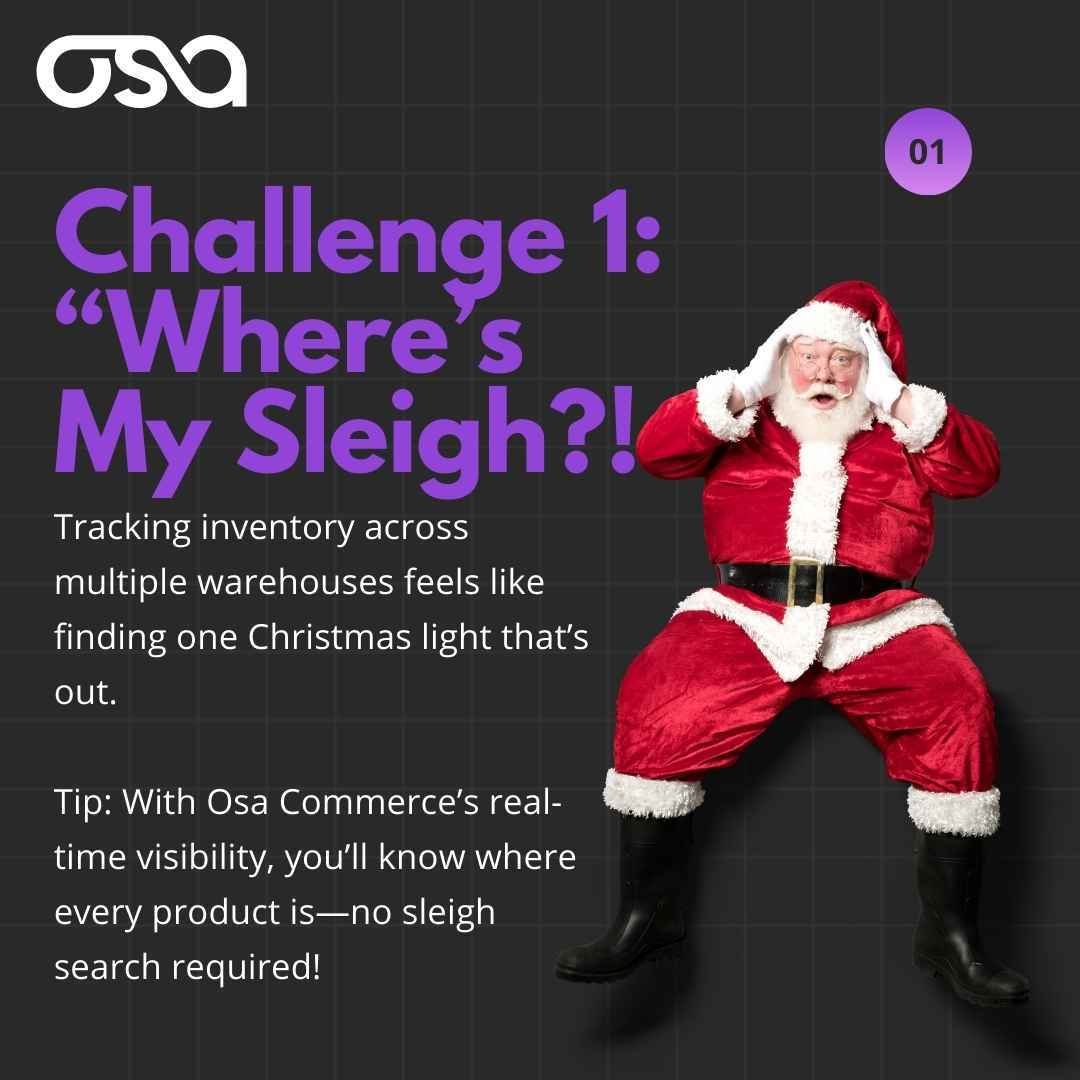
By using advanced inventory tracking, you can maintain optimal stock levels and meet customer demands efficiently. Real-time visibility not only saves time but also significantly reduces the risk of errors, making your supply chain more reliable during peak seasons.
Anticipating the Rush: Handling Last-Minute Elf Requests
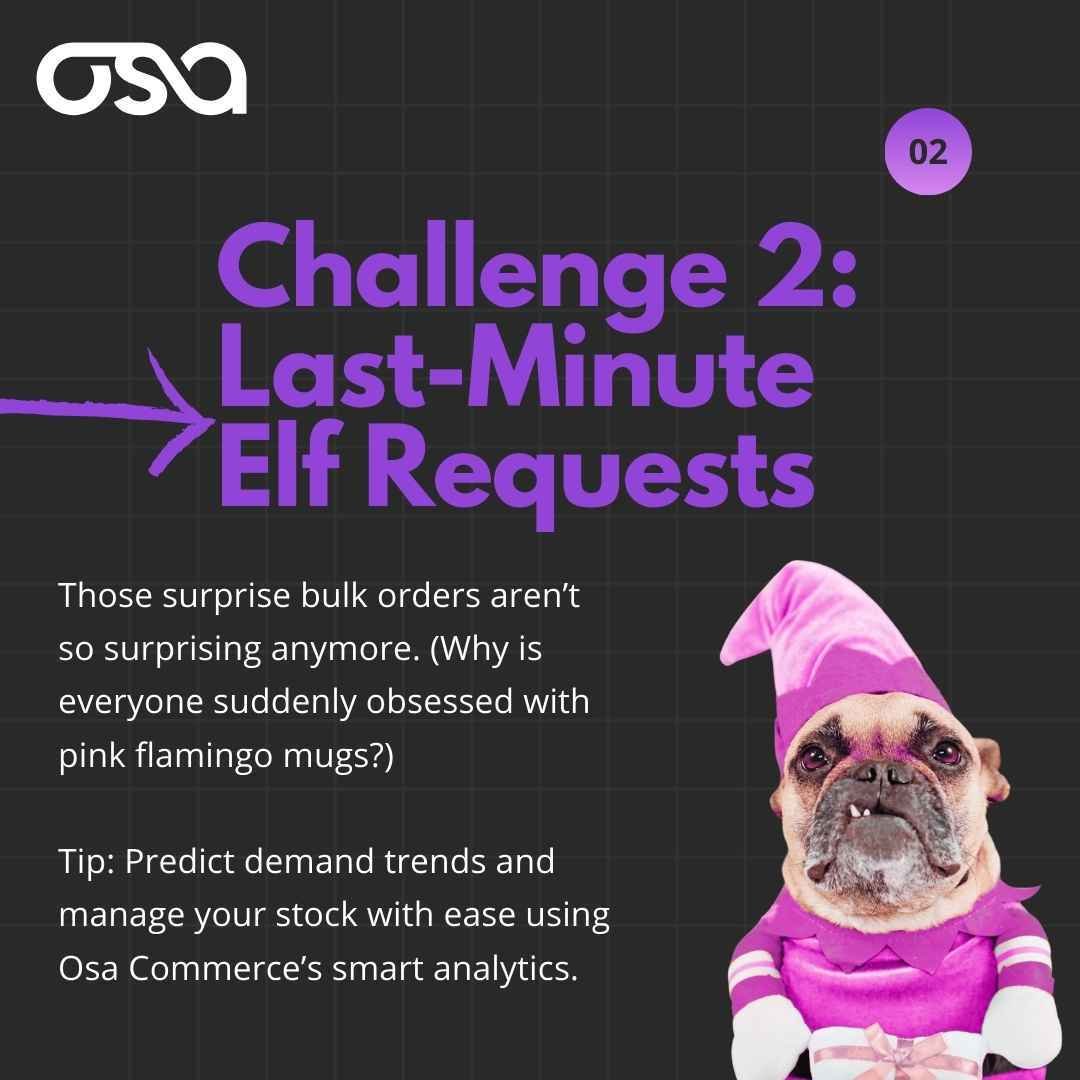
The holidays often bring a surge of last-minute bulk orders, making it challenging to keep up with demand. Who knew lava lamps would become a holiday sensation overnight? With AI-driven smart analytics, you can predict demand trends and manage your stock proactively.
Smart analytics tools analyze past sales data and market trends to forecast future demand accurately. This foresight allows you to stock up on popular items and avoid overstocking on less popular products, ensuring you're always prepared for those unexpected elf requests. Efficient demand forecasting helps in reducing stockouts and overstock situations, ultimately leading to better customer satisfaction and increased sales.
Speeding Up Santa's Route: Overcoming Sluggish Deliveries
Late deliveries cost you customers. Timely delivery is crucial in holiday shopping, and your packages need to move faster than Dasher and Prancer combined to keep up with customer expectations. Last-Mile Management technology solutions can optimize your 3PL coordination, ensuring smooth and swift deliveries even in the most challenging conditions, just like Rudolph.

By integrating advanced logistics software, you can smooth out your delivery processes and improve coordination with third-party logistics providers. This optimization leads to faster shipping times and fewer transit delays, which keeps customers coming back. During the holiday season, when every minute counts, having an efficient delivery system can make all the difference.
The stakes are real: in Narvar's 2025 post-purchase survey, 74% of US shoppers had at least one late delivery in the past year, and half said they're less likely to shop again with a retailer after one. Real-time tracking and proactive delay alerts from Last Mile Management let you warn customers before they have to ask.
Beating the Clock: 2026 Carrier Deadlines and Peak Surcharges
Miss a carrier cutoff and you pay twice. Gifts arrive after the holiday, and the peak surcharges you paid to ship them still eat into your margin. Your holiday fulfillment plan needs the 2026 dates and fees built in before the first rush order drops.
Start with the calendar. The USPS recommended send-by dates for Dec. 25 delivery in the lower 48 are Dec. 17 for Ground Advantage and Dec. 18 for Priority Mail. USPS gives Priority Mail Express one extra day, with a Dec. 19 send-by date.
FedEx works to an earlier finish line. The FedEx last-day-to-ship dates target arrival by Dec. 24, 2026, so set your FedEx order cutoffs a day ahead of your USPS plan.
Your warehouse cutoff has to land earlier than any carrier date. Work backward from each send-by date and subtract the time your team needs for pick-and-pack and carrier pickup. Then publish that order cutoff on every sales channel your clients sell through.
Fees climb on the same calendar. The FedEx demand surcharges for residential Ground and Home Delivery packages are $0.50 per package for Oct. 26–Nov. 22, rising to $0.80 for Nov. 23–Dec. 27. FedEx drops that fee back to $0.50 for Dec. 28–Jan. 17.
UPS follows the same pattern. Supply Chain Dive reports that UPS holiday surcharges for 2026 run $0.50–$2.50 per package across UPS Ground and Air services between Oct. 25, 2026, and Jan. 16, 2027.
Build these cutoffs into your order routing now. With 50+ carrier integrations, Osa Last Mile Management lets you route each order to the carrier that still makes the deadline. Cutoffs only help if orders leave the dock on time, so see how Osa helps teams grow holiday revenue with the right WMS through faster picking.
Managing the Flood: Tackling the Returns Avalanche
Brace yourself: holiday returns are coming, and they're bigger than Aunt Marge's fruitcake. In its 2025 returns report, the National Retail Federation found retailers expected 17% of holiday sales to come back. Those holiday returns are part of the $849.9 billion in merchandise NRF expected shoppers to return across all of 2025.
That volume can overwhelm your logistics operations. A smooth returns process simplifies reverse logistics and reduces waste, making it easier to handle the influx of returns.
Efficient returns management not only improves customer satisfaction but also minimizes the financial impact of returned goods. By automating and optimizing the returns process, you can restock returned items quickly and cut processing times, which keeps inventory counts accurate. This approach helps in maintaining a positive customer experience even after the holiday rush.
Nearly half of retailers in the same NRF survey (49%) said they plan to lean more on third-party logistics providers to handle holiday returns, so 3PLs that can process returns fast win that business.
Balancing the Budget: Solving Santa's Budget Crisis
Logistics costs can skyrocket during the holiday season, putting a strain on your budget. Santa's workshop might need a bailout, but with cost-saving integrations, you can cut costs and maximize revenue. These integrations surface cost-saving opportunities in every stage of your supply chain, including shipping and returns.
By using technology to cut manual work and reduce inefficiencies, you can achieve real cost savings. This financial optimization ensures that you maintain profitability during the busiest time of the year without compromising on service quality. Efficient budget management allows investment in other critical areas of your business, ensuring long-term growth and success.
Conclusion
Holiday logistics takes a plan and the technology to run it. With Osa Unified Commerce, you get real-time visibility and accurate demand forecasting, along with tighter 3PL coordination. Your inventory is managed efficiently and your deliveries move faster.
These technologies lift customer satisfaction by meeting demand and cutting delivery times. They also speed up returns and keep your costs in check.
For a full prep plan, work through our ecommerce peak season checklist before volume spikes. An optimized supply chain turns potential chaos into a well-orchestrated operation that protects your profit and your customers' loyalty during peak season.
Holiday Fulfillment FAQs
Answers for teams planning holiday fulfillment.
When Should I Start Planning for Holiday Fulfillment?
Start planning by late summer, so inventory and carrier capacity are locked in before demand climbs. Adobe expects $95.8 billion in US online spend in October 2026 alone, up 8%, which means peak demand starts before November. Finalize forecasts and carrier contracts early, then use October to test routing and staffing at volume.
What Are the 2026 Holiday Shipping Deadlines?
For lower-48 delivery by Dec. 25, USPS recommends sending Ground Advantage by Dec. 17 and Priority Mail by Dec. 18. Priority Mail Express has the latest USPS send-by date, Dec. 19. FedEx last-ship dates target delivery by Dec. 24, 2026. Carriers can adjust these dates, so check the USPS and FedEx sites before you set final cutoffs.
What Does a Fulfillment Service Do?
A fulfillment service receives and stores inventory for a brand, then handles pick-and-pack and shipping for each order. Most also process returns. During the holidays, a 3PL adds overflow capacity and multi-warehouse reach when in-house teams hit their limits. Osa Commerce connects those warehouse and order systems in one platform, so every partner works from the same data.
How Do I Reduce "Where Is My Order" Tickets During the Holidays?
Get ahead of the question. Send proactive shipment status updates and delay alerts, and give customers a real-time tracking view they can check on their own. Osa Last Mile Management provides real-time delivery progress and predictive AI/ML alerts. Your team can flag delays before customers have to call and open a ticket.