


 Osa Commerce
In this guide
When your customers click 'buy now' but your warehouse has no idea what inventory is actually available, every marketing dollar spent becomes a gamble with your brand reputation on the line.
Key Takeaways
- Real-time inventory visibility works as a single source of truth across every touchpoint.
- Siloed systems that update on different cadences lead to stockouts and overselling.
- Without synced inventory data, teams cannot make smart calls on ad spend or fulfillment routing.
- Leading direct-to-consumer brands favor fulfillment reliability over acquisition speed in logistics.
In this guide
The Hidden Cost of Disconnected
Systems: When Marketing Success Becomes an Operations Nightmare
 The digital storefront lights up with a surge of orders. Your TikTok campaign just went viral, Instagram engagement is through the roof, and your Cost Per Acquisition metrics look stellar. For a brief moment, your marketing team celebrates what appears to be a major win. But in the warehouse, a completely different story is unfolding—one that could cost you far more than what you spent to acquire those customers in the first place.
This is the "Viral Trap." A fundamental disconnect between what marketing promises and what operations can actually deliver. When your supply chain data is broken, that viral moment isn't a growth engine—it’s a reputation killer.
The Missing Link Between Customer Promise and Fulfillment Reality
In the era of social commerce, the customer journey has fundamentally changed. Modern consumers don't distinguish between marketing promises and fulfillment capabilities—they expect seamless execution from the moment they tap 'Buy Now' until the package arrives at their door.
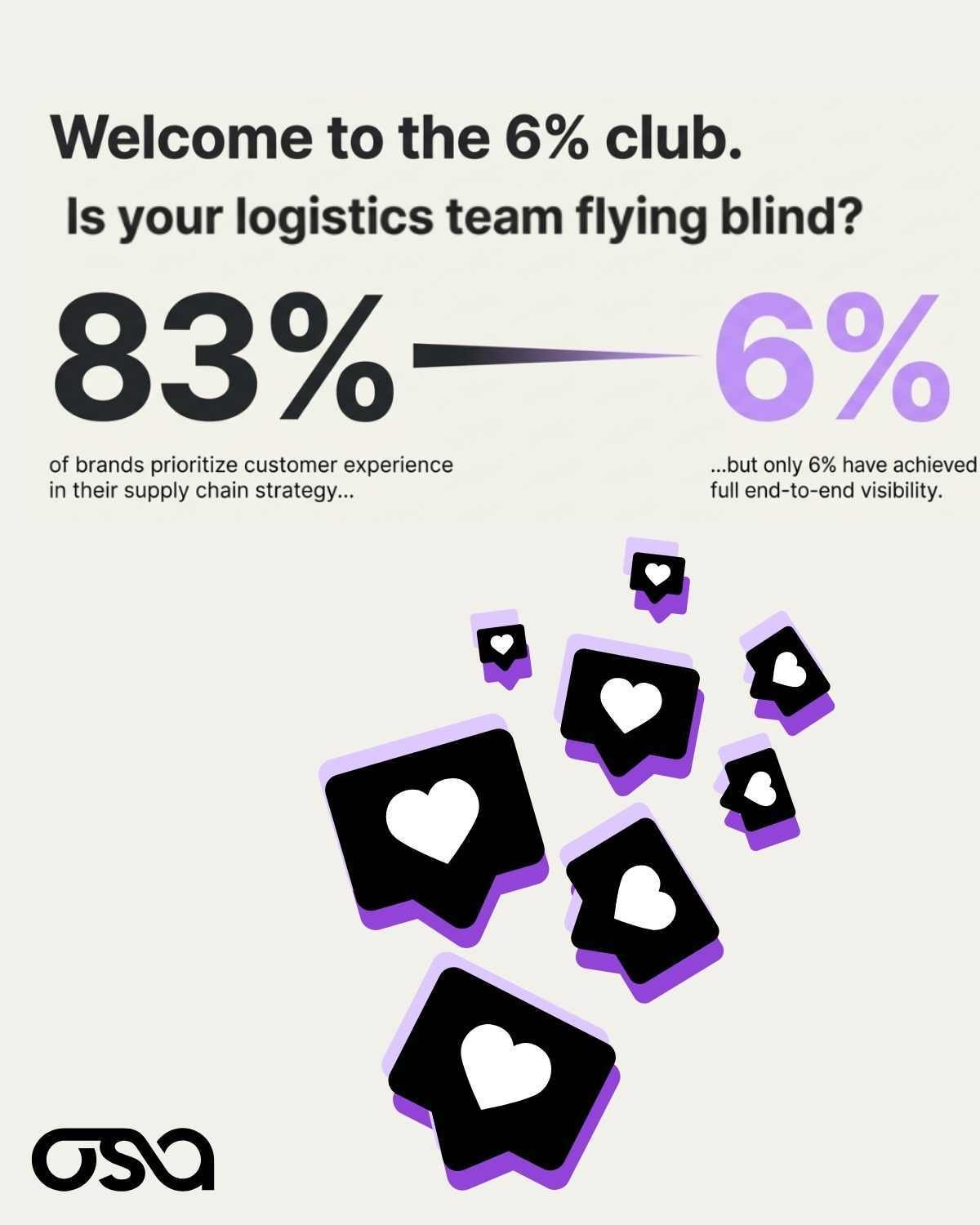
Today, the distance between "Seen on Feed" and "Delivered to Door" is the only metric that truly matters for omnichannel sellers' retention. And when these worlds don't talk, the result is lost sales and "One-and-Done" customers. You may have paid for the acquisition, but because of delayed shipping, "ghost" tracking numbers, or out-of-stock cancellations, that customer will never return.
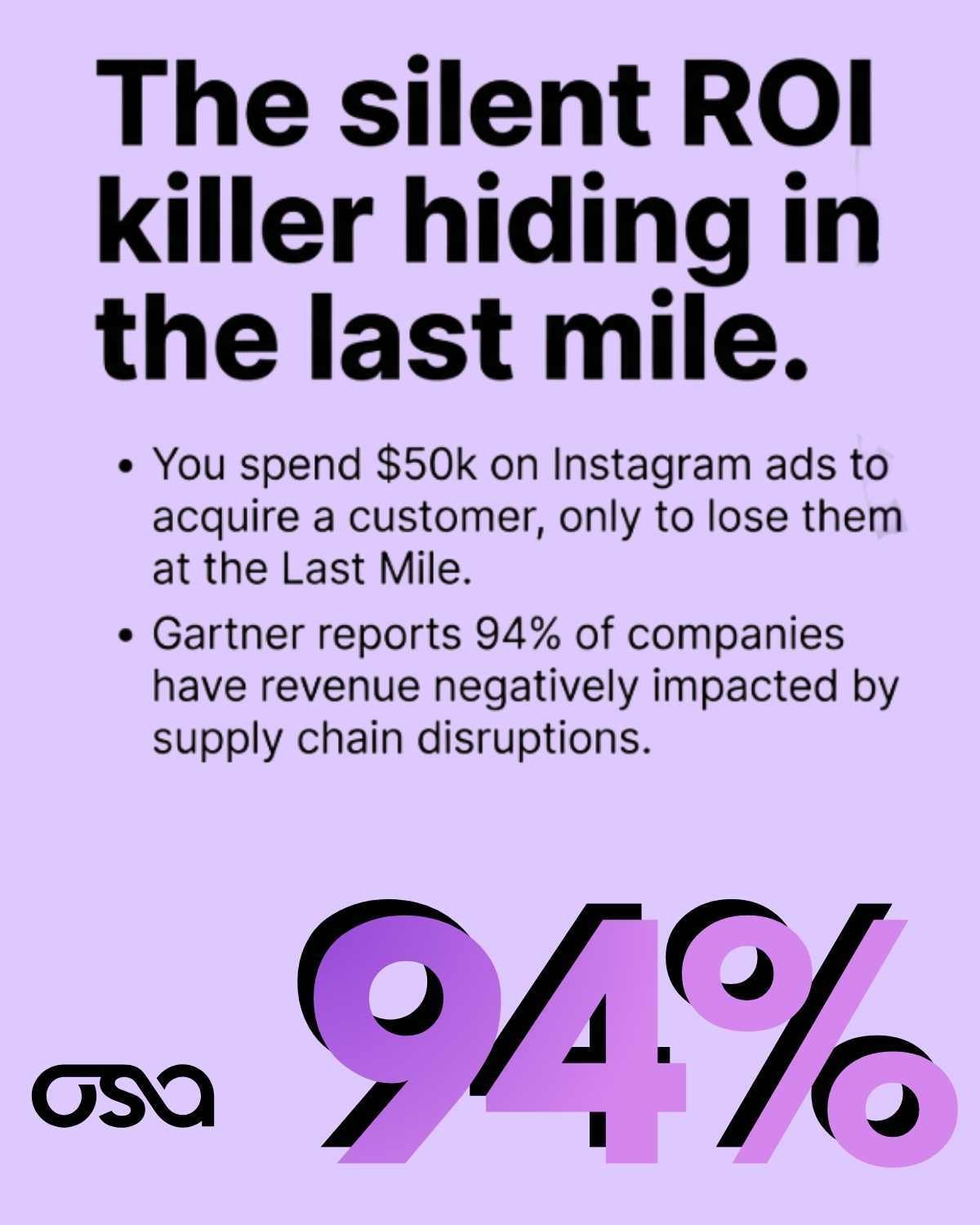
Real-time inventory visibility isn't just about knowing what's in stock—it's about creating a single source of truth that synchronizes across every touchpoint in your commerce ecosystem. This means inventory data flows bidirectionally between your TikTok Shop, Instagram storefront, Shopify site, third-party logistics (3PL) warehouses, retail locations, and pop-up shops. Without this unified visibility layer, you're essentially flying blind, unable to make intelligent decisions about ad spend, promotional timing, or fulfillment routing.
How Siloed Data Creates a Cascade of Stockouts, Overselling, and Customer Disappointment
The anatomy of a supply chain failure typically begins with a seemingly minor data lag. Your Shopify store shows 50 units available. Your TikTok Shop shows 45. Your 3PL's warehouse management system (WMS) shows 38 units on hand, with 12 allocated to pending orders that haven't synced yet. Your marketing team, seeing strong demand signals, increases ad spend. Orders flood in. By the time the dust settles, you've accepted 65 orders for 38 units of actual inventory.
This overselling scenario isn't hypothetical—it's the predictable outcome of siloed data systems that update on different cadences and lack a unified orchestration layer. Each system operates independently, making decisions based on incomplete information. Your ecommerce platform accepts orders based on its local inventory count. Your warehouse allocates stock based on pick lists generated hours ago. Your marketing automation continues pushing products that are already sold out across multiple channels.
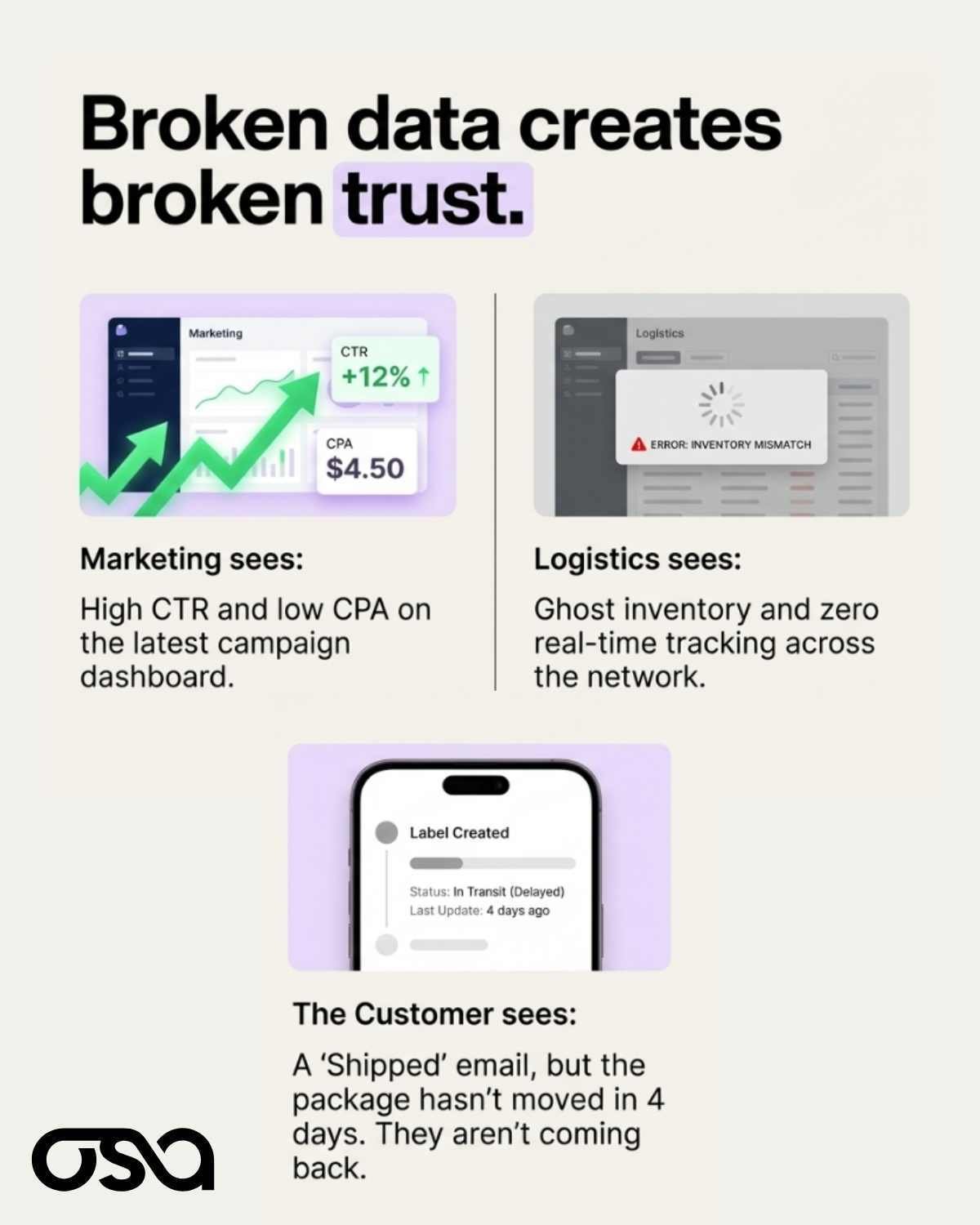
Unified Commerce Platforms: Turn Supply Chain Data Into A Competitive Marketing Advantage
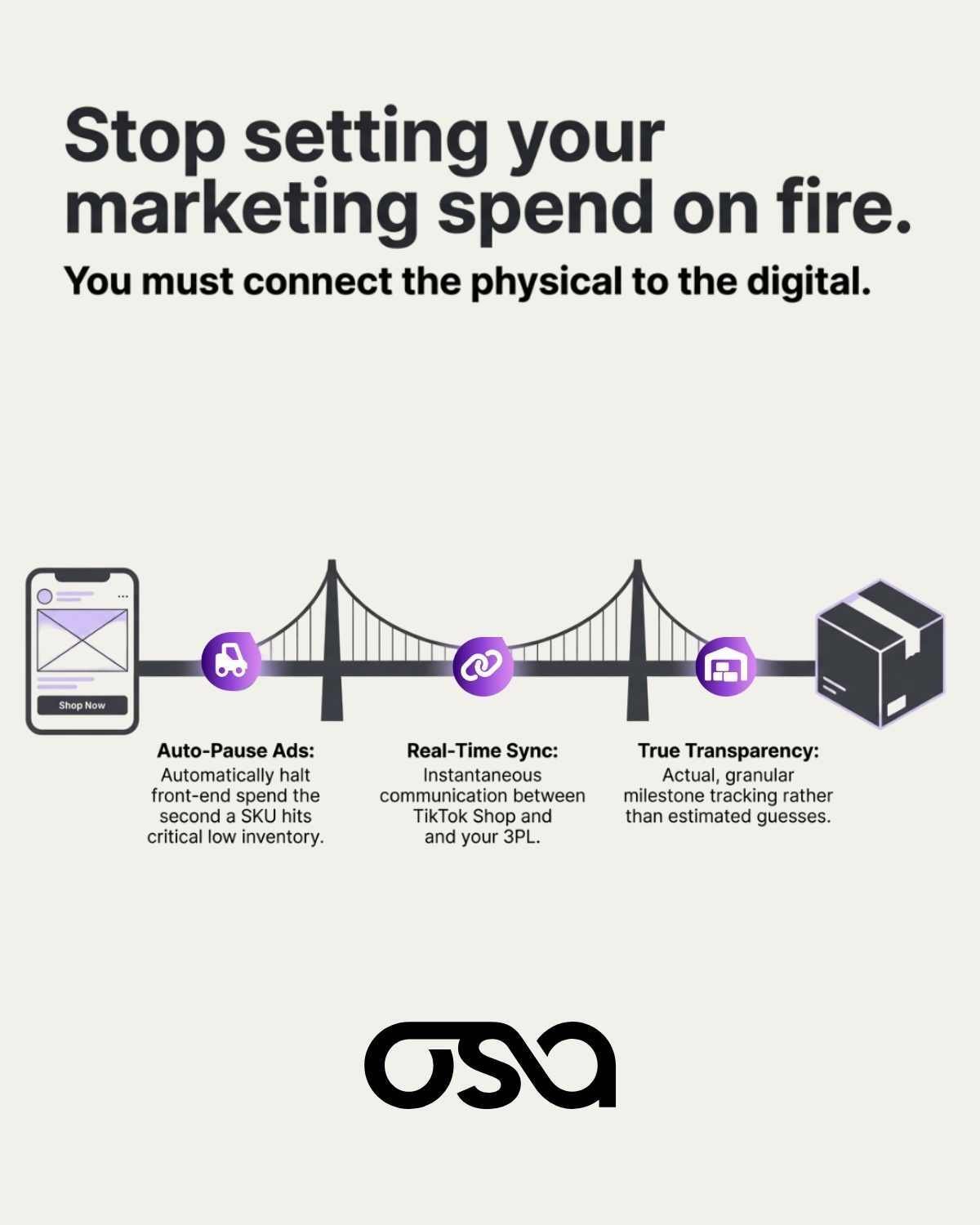
The evolution from siloed systems to unified commerce represents a fundamental shift in how D2C brands approach growth. And the practical implications are significant. When advertising platforms are connected to actual inventory availability, you can automatically throttle ad spend as products approach stockout thresholds—protecting your budget and your reputation simultaneously.
The Osa Unified Commerce Platform makes this vision a reality with robust integration capabilities—API connectivity, EDI translation, prebuilt connectors to major e-commerce platforms and marketplaces—combined with intelligent orchestration logic that can make automated decisions based on business rules and machine learning models. Cloud-based, technology-agnostic infrastructure provides the scalability to handle demand spikes during viral moments without the capital investment and implementation timelines of legacy systems.
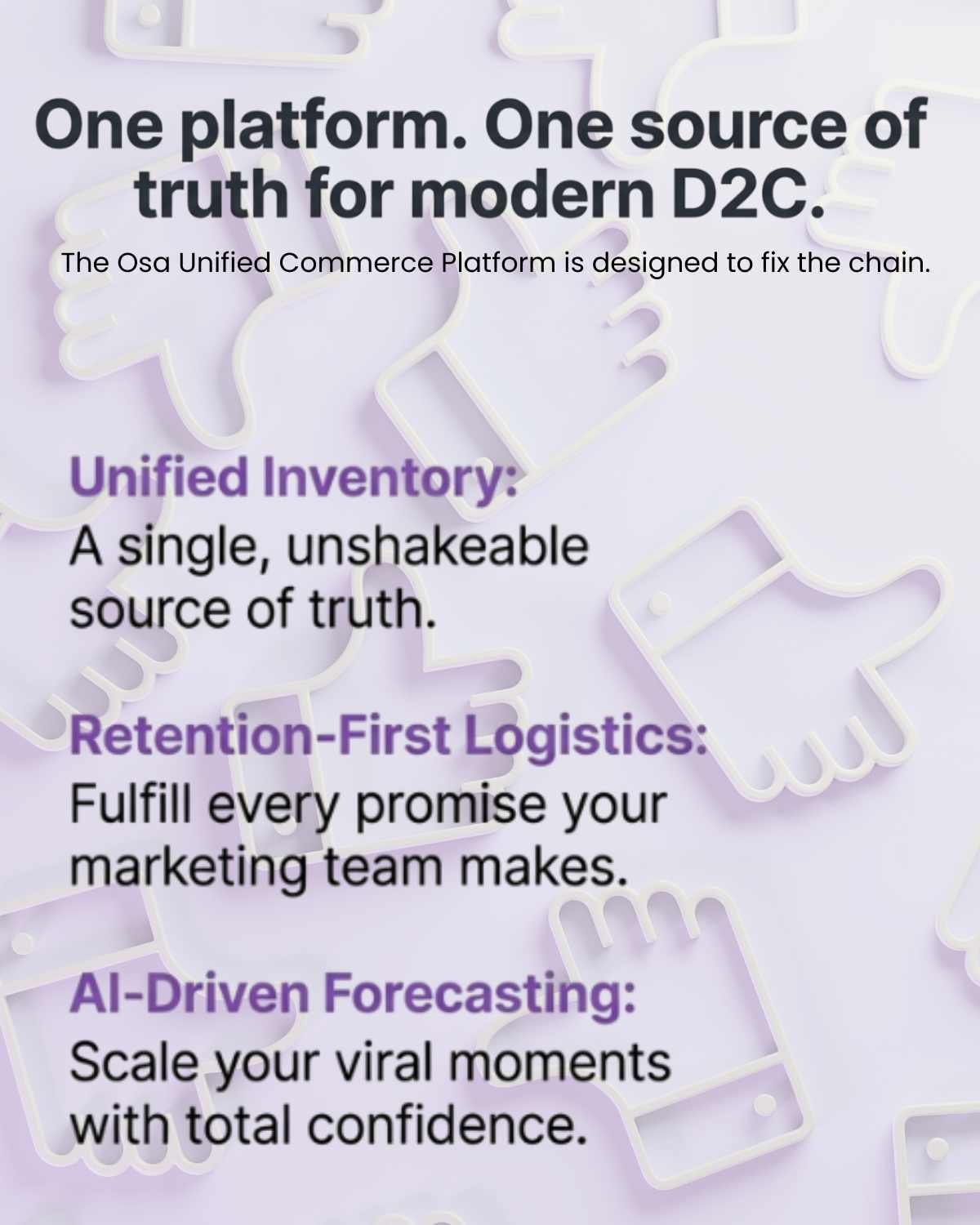
Bridge the Divide of Marketing and Logistics
Leading D2C brands are adopting a 'retention-first logistics' mindset that prioritizes fulfillment reliability over acquisition velocity. This doesn't mean slowing growth—it means ensuring growth is sustainable, as the operational foundation can support the demand marketing generates. By integrating supply chain data into marketing dashboards and decision-making processes, brands can identify the optimal balance between aggressive acquisition and reliable fulfillment.
The future of D2C success belongs to brands that recognize supply chain visibility as a marketing asset, not just an operational requirement. When your logistics capabilities can actually deliver on your marketing promises—consistently, transparently, and at scale—you transform viral moments from reputation risks into sustainable growth engines. The brands that achieve this alignment will capture disproportionate market share as competitors continue to burn customer trust and marketing budget on promises they can't keep.
Don't let your next viral moment become a logistical nightmare. The future belongs to brands that recognize supply chain visibility as a marketing asset.
Stop guessing. Start tracking. Connect your supply chain to your brand's heartbeat with Osa Commerce.
