


 Osa Commerce

TikTok Shop has transformed social commerce overnight, turning viral moments into instant order surges that can overwhelm unprepared fulfillment operations and expose hidden gaps in your supply chain infrastructure.
In this guide
In this guide
When Viral Becomes Volume: The Social Commerce Fulfillment Challenge
Brand marketing and ecommerce teams move fast...and in real time. In fact, a marketing team just celebrated: a TikTok creator featured their product, and within hours, orders are flooding in at rates that would normally take weeks to accumulate.
But in the warehouse, celebration quickly turns to concern. Fulfillment operations, optimized for predictable ecommerce flows, suddenly face the reality of social commerce— unpredictable, explosive demand spikes that can overwhelm even well-established supply chain operations.
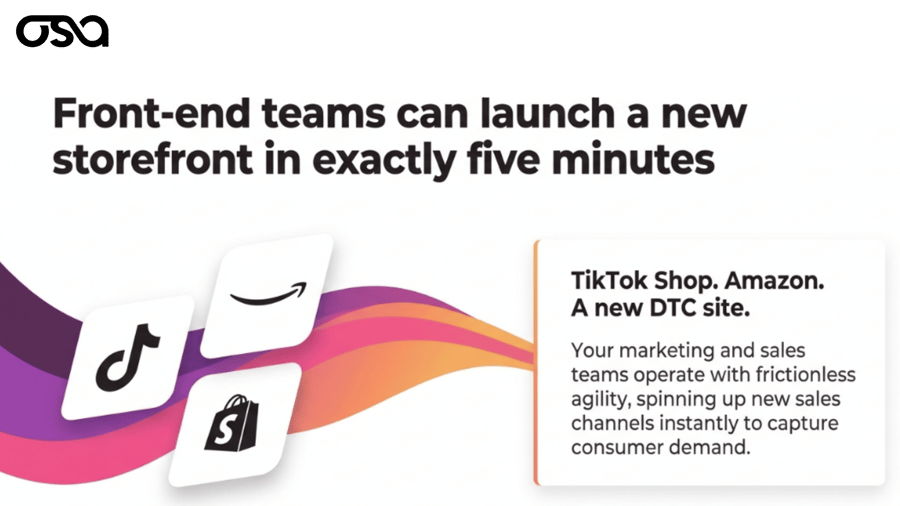
Front vs. Backend Fulfillment
As a logistics leader at a high-growth omnichannel brand, managing operations across multiple sales channels, you know the messy reality behind the scenes.
Launching a front-end sales channel is easy.
Connecting it to your back-end fulfillment is a nightmare.
Welcome to the "fragile middle layer."
Yet, many fulfillment operations still rely on inventory systems that update once or twice daily. This creates a dangerous and scary lag between what customers see as available and what actually exists in the warehouses. This disconnect leads to overselling, order cancellations, damaged customer relationships, and lost revenue during the exact moment when demand is highest.
As global ecommerce sales push past the $6.8 trillion mark in 2026, operations teams are feeling the squeeze. Here is why your omnichannel growth is causing fulfillment chaos—and how artificial intelligence is completely rewriting the rules of logistics to fix it.
The Problem: Your Tech Stack is Stuck in the Past
Your team is already juggling inventory allocation across Shopify, Amazon, traditional retail partnerships, and direct-to-consumer channels. When order volumes spike across multiple channels, old tech stacks start to crack.
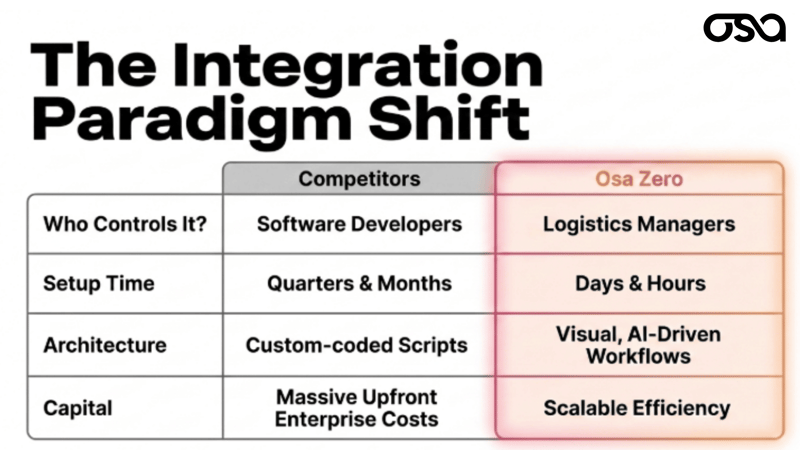
Unfortunately, most $50M+ brands are stuck choosing between two legacy (and often terrible) options to manage order operations:
-
Dinosaur Order Management Systems(OMS): Expensive upfront costs, six months+ to deploy, and are completely rigid once live.
-
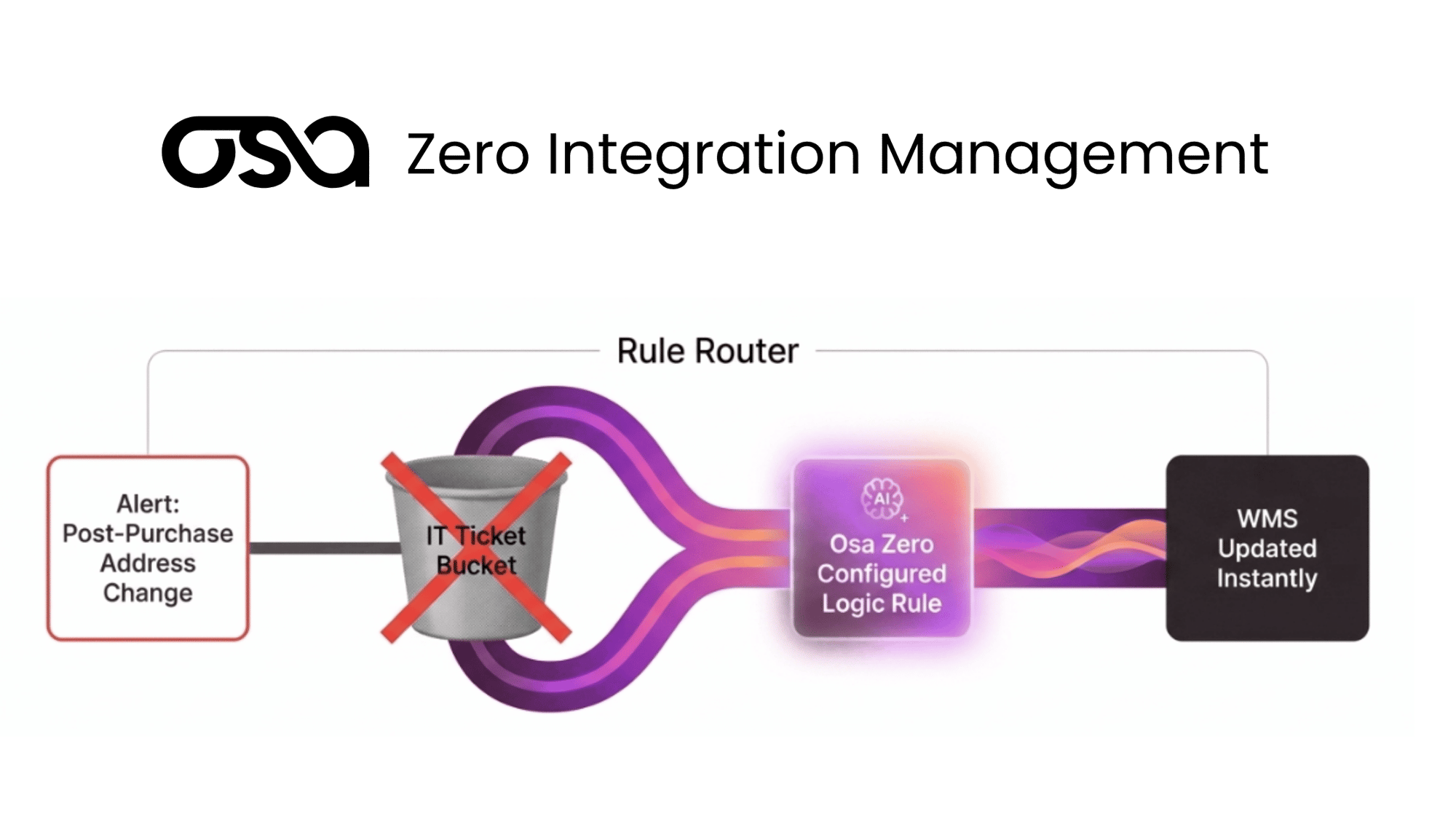
Clunky Middleware (iPaaS): Platforms like Celigo or MuleSoft that might connect applications, but in many cases, brands end up begging or paying for an IT developer to write custom code every time a simple routing rule needs to be changed.
How AI is Changing the Game: The End of "Bolt-On" Tech
The management of logistics is undergoing a massive shift. It is not just about basic "smart algorithms" anymore. The new standard is Agentic AI—artificial intelligence that actively does the grunt work for you.
According to recent Gartner research, the market for supply chain software featuring "agentic AI" is forecast to explode to $53 billion by 2030. Why? Because the industry is done with bolting basic AI features onto outdated, legacy systems.
Instead of paying humans to manually catch order errors, manage inventory drift, or correct bad shipping addresses, AI agents act autonomously to spot exceptions and route orders in real-time. In fact, Gartner reports that 55% of supply chain leaders expect this exact type of AI to fundamentally reduce the need for manual, entry-level operational work over the next few years. The future is an AI-native supply chain.
AI-powered visibility continuously monitors stock levels, order velocity, and fulfillment capacity in real-time, enabling automated adjustments to inventory allocation as demand patterns shift. For brands operating across distribution centers, retail partnerships, and direct fulfillment, this real-time visibility becomes the foundation for responsive order orchestration.
The Solution: The AI-Native Fix for the Middle Layer
Traditional order management systems were built for a different era of commerce—processing predictable order flows through predetermined fulfillment paths. If the limitations of older order management become apparent during high-velocity moments, it's too late:
-
Manual routing decisions are impossible at scale and speed.
-
Static routing rules based on zip codes or predetermined warehouse assignments fail to optimize for actual current conditions.
-
Disconnected systems create delays and errors as order data moves between platforms, warehouses, and shipping carriers.
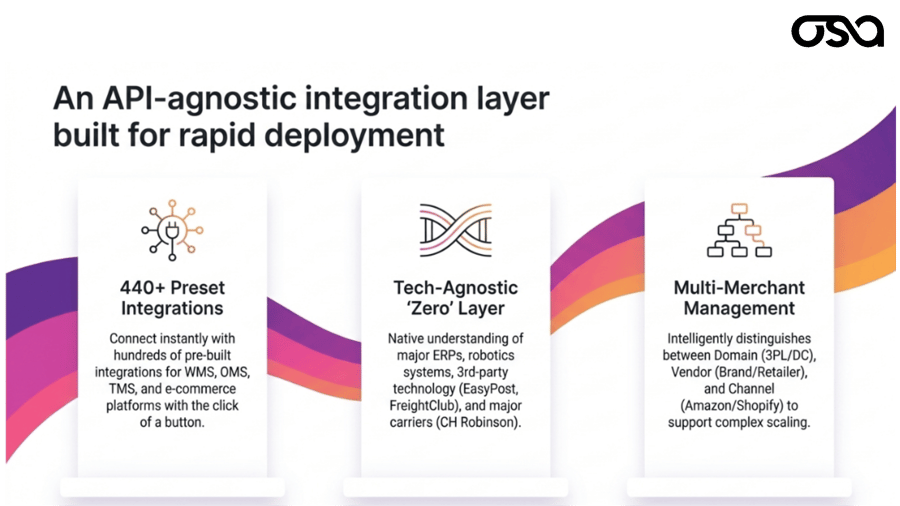
This is exactly where Osa Zero Integration Management comes in. It sits right in the sweet spot between storefronts (Shopify, Amazon, TikTok) and backend operations (3PLs, NetSuite, WMS). It integrates the heavy-duty brainpower of an enterprise OMS combined with the plug-and-play connectivity of modern middleware—all without needing an IT team.
Major market players already rely on this infrastructure. Here is how Osa Zero gives D2C brands an unfair advantage:
-
No-Code, AI-Driven Workflows: Stop paying developers for custom code. Osa Zero enables logistics teams to build, test, and launch order routing rules in minutes using a simple visual builder or natural-language AI. You literally just tell the AI what you want to happen.
-
Crush Operational Costs: Osa Zero automates messy exception handling and instantly syncs your data. The result? Brands are cutting manual operational work by up to 80%, eliminating 99% of fulfillment errors, and reducing total operational costs by up to 85%.
-
Insane Speed-to-Market: Need to hook up a new 3PL before peak season? Want to launch on a new marketplace this weekend? With Osa Zero’s massive pre-built integration network, new fulfillment nodes can be connected in hours or days, not quarters.

AI-powered order orchestration transforms this equation by automating complex routing decisions based on real-time supply chain conditions. Advanced platforms continuously evaluate multiple factors—inventory availability, warehouse capacity, shipping costs, delivery timeframes, and historical performance—to determine the optimal fulfillment path for each order.
Stop Letting Software Slow You Down
For high-growth brands, enterprise-grade orchestration and seamless integration without the burden of legacy IT overhead are becoming a reality. It is just a matter of when omnichannel brands and 3PL partners are ready to bridge the gap between front-end modernization and back-end stagnation.
If your logistics team is spending more time fighting software limitations and fixing order errors than actually optimizing supply chain operations, it’s time to upgrade your tech stack. No need to hire another developer or buy another clunky enterprise system. Modern commerce requires an API-agnostic AI-native middle layer.
Ready to see how Osa Zero can put your order operations on autopilot and protect your margins?
