


 Osa Commerce
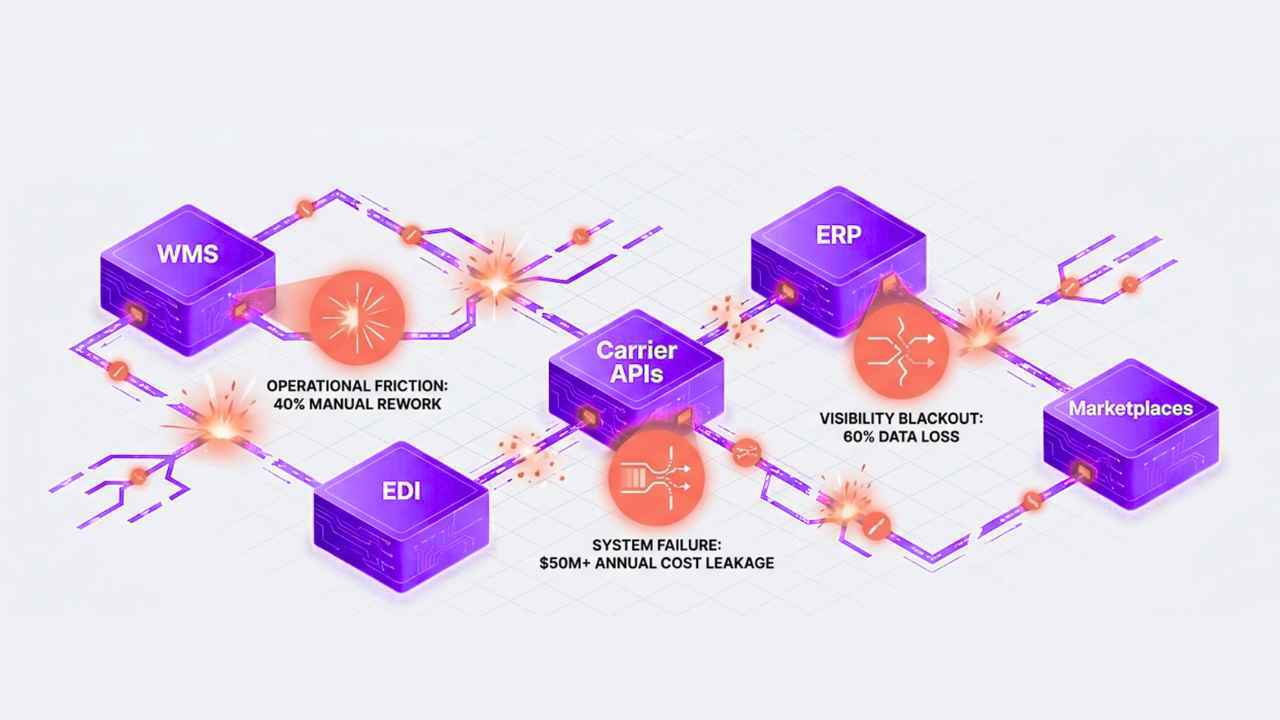
Third-party logistics providers face mounting pressure to deliver real-time visibility, seamless order orchestration, and flawless multi-channel fulfillment—all while managing complex retailer compliance requirements and protecting profit margins.
The Franken-Stack is Killing Your Margins
Let’s be honest, third-party logistics (3PL) providers aren't short on software features. Most likely have a warehouse management system (WMS), an order management system (OMS), a transportation management system (TMS), and an ERP. Yet, despite this massive technology footprint, 3PL providers still face mounting pressure to deliver real-time visibility, seamless order orchestration, and flawless multi-channel fulfillment. Not to mention simultaneously being expected to manage complex retailer compliance requirements and protect profit margins.
If your operations team is still fighting daily fires and onboarding clients takes months, you aren’t suffering from a lack of technology. You are suffering from integration debt.
The Braking Point: Why 3PLs Need a Single Order Record
Recent data shows that 89% of operations and supply chain leaders admit their technology investments haven’t fully delivered expected results, citing integration complexity as the primary culprit. In addition, 51% of leaders report that integrating online and offline channels is their single greatest strategic hurdle.
When your entire business relies on stitching point solutions together with custom code, the seams are bound to burst. This fragmented approach creates fundamental pain points across the order lifecycle.
Here is a look at exactly where the order lifecycle breaks for 3PLs, the real cost of those failures, and how a unified approach can turn integration nightmares into a competitive advantage.
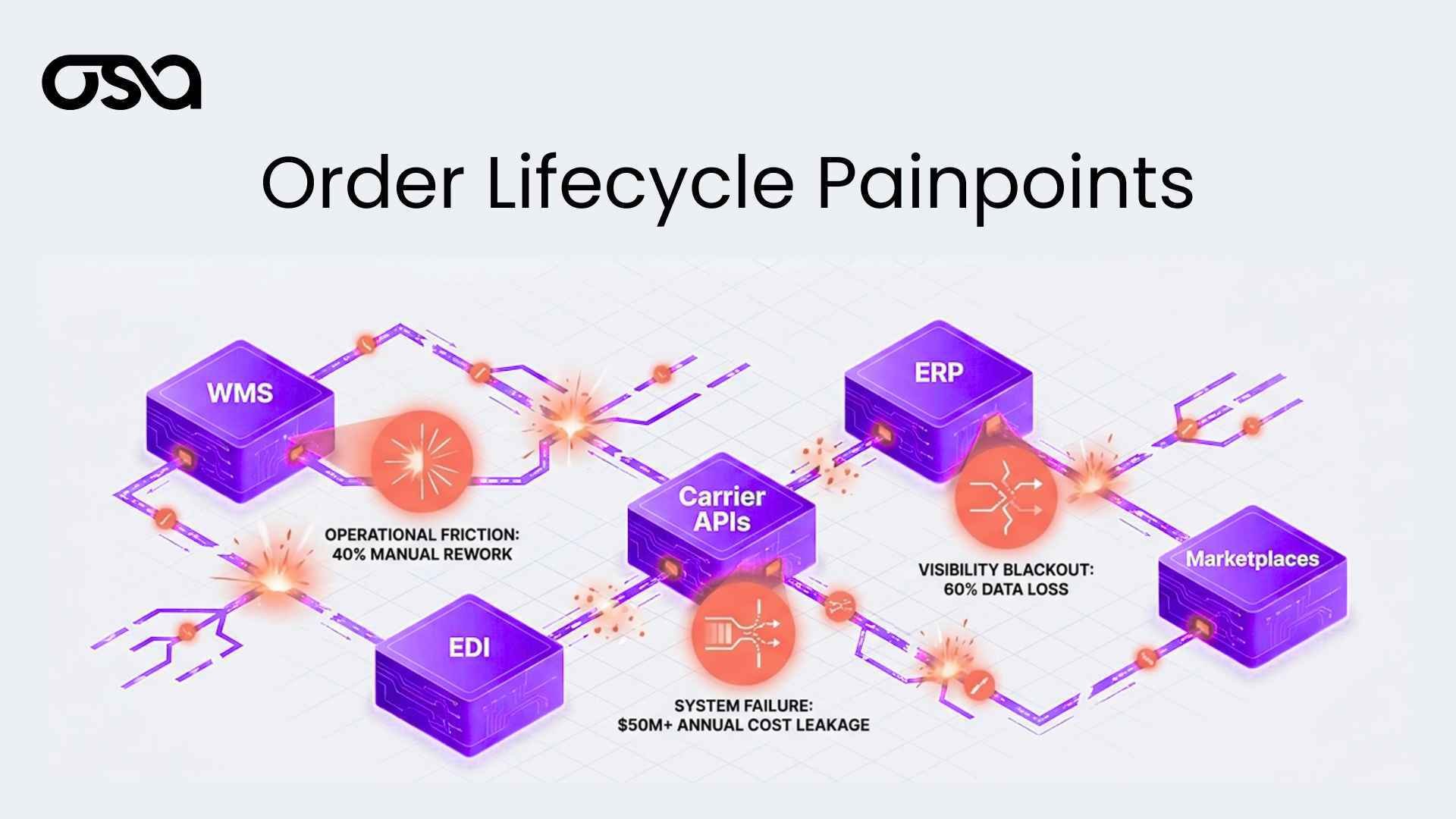
The 6 Stages of Order Lifecycle Pain
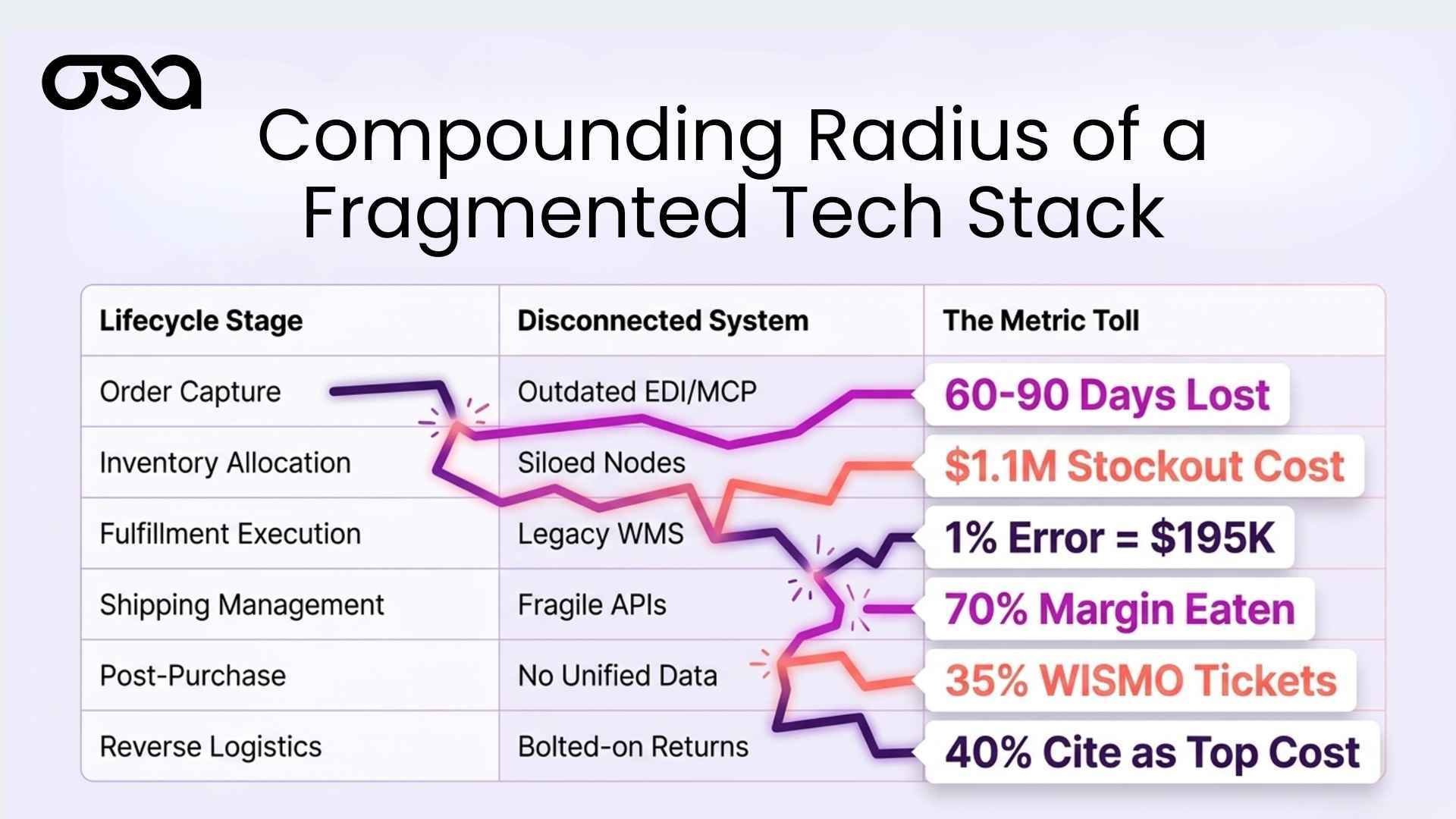
The traditional order lifecycle is managed by a patchwork of disconnected systems. When these systems fail to communicate seamlessly, operational friction occurs at every handoff, and costs skyrocket across all six stages of execution.
1. Order Capture
Multiple sales channels feeding into disparate systems without a unified record lead to duplicate entries and heavy data reconciliation burdens. Point-to-point connections are expensive to build, and modern AI shopping agents placing orders via protocols like the Model Context Protocol (MCP) leave legacy tech stacks stranded.
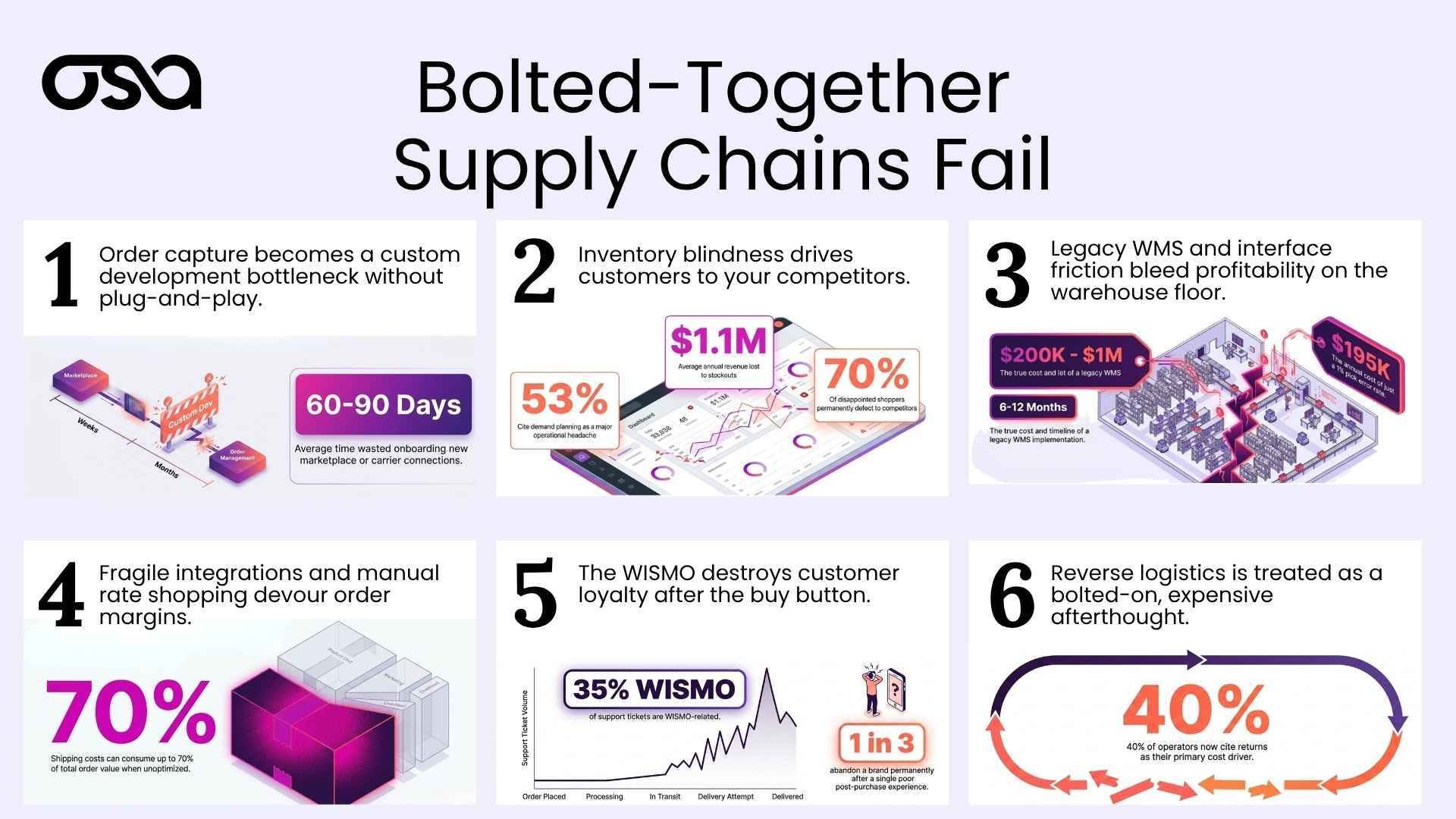
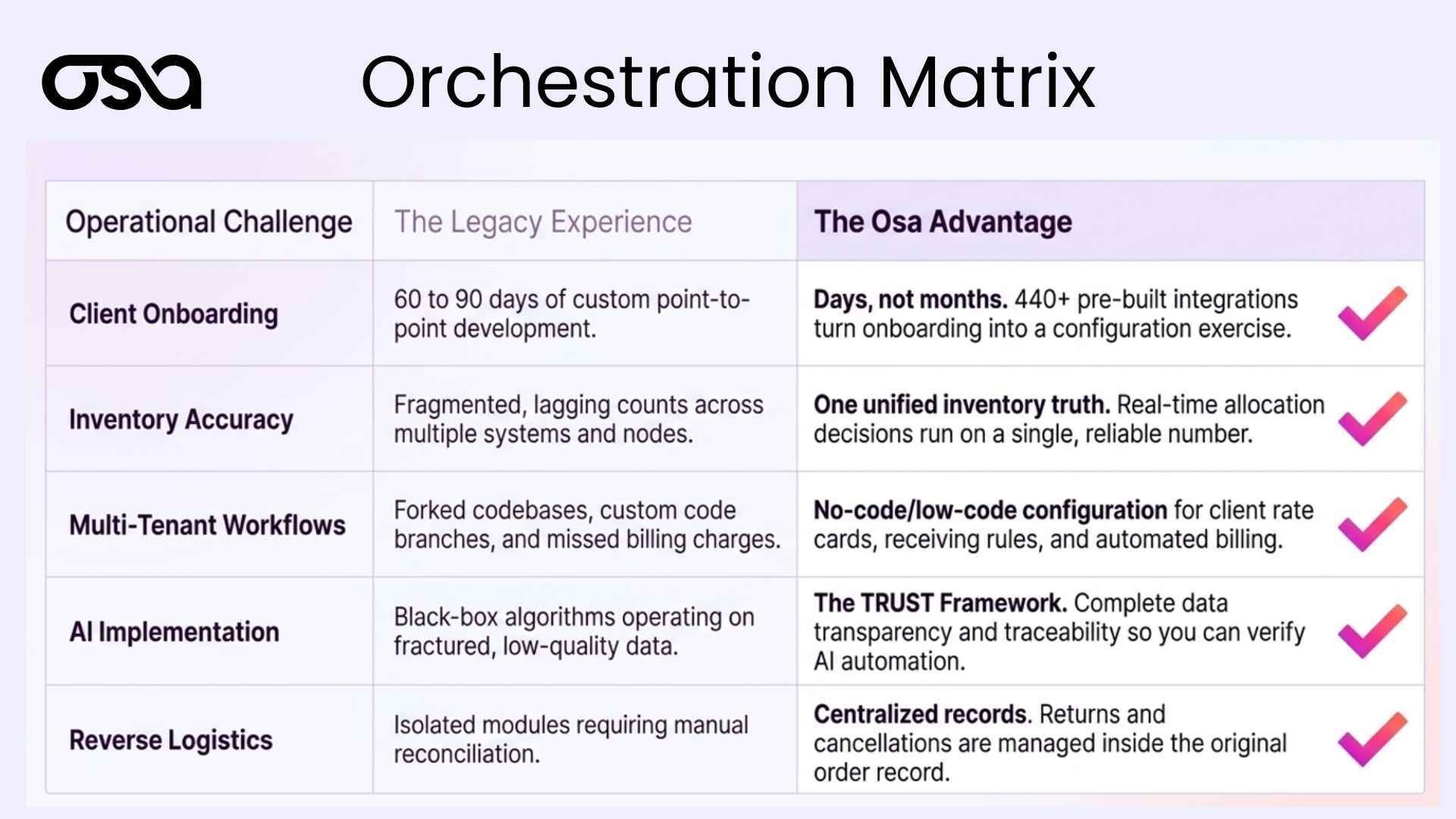
Operational Impact: Onboarding a single client's marketplace and carrier connections can take 60 to 90 days on average.
2. Inventory & Allocation
Stock counts lag across channels by hours or days, resulting in a lack of a single, real-time view across multiple stores and warehouses. Stockouts, oversells, and misallocated inventory erode customer trust.
Operational Impact: Lagging counts cause costly overselling on one channel and false stockouts on another. Retailers lose an average of $1.1 million annually to stockouts, driving 70% of disappointed shoppers straight to competitors.
3. Fulfillment Execution
Legacy enterprise WMS platforms cost anywhere from $200,000 to over $1 million to implement and can take 6 to 12 months to go live—which is massive overkill for mid-market operations. In many cases, legacy WMS operate in isolation from broader order orchestration. This isolation creates manual workarounds and significant compliance risks.
Operational Impact: When legacy systems buckle under multi-tenant complexity, a tiny 1% pick-error rate can cost a standard 1,500-order-per-day facility roughly $195,000 a year in direct operational losses.
4. Shipping & Carrier Management
Shipping breaks down without centralized logic to optimize routing decisions based on cost, speed, and service level requirements. A single breaking API change from a carrier can instantly knock out shipping for every client.
Operational Impact: Shipping now averages roughly 70% of total order value for online retailers once surcharges and dimensional-weight pricing are factored in, leaving no room for manual errors.
5. Post-Purchase Visibility
Post-purchase visibility gaps leave both 3PLs and their clients blind to order status. This generates a high volume of inquiries that consume valuable customer service resources. Support teams rarely have a single source of truth to answer basic tracking questions, resulting in no proactive notifications when upstream delays occur.
Operational Impact: "Where is my order?" (WISMO) queries account for over 35% of all ecommerce customer support tickets. A single bad post-purchase experience is enough to make one in three customers abandon a brand permanently.
6. Returns & Reverse Logistics
Returns require seamless coordination across inventory receiving, quality assessment, restocking decisions, and financial reconciliation. Returns are cited by 40% of leaders as a major cost driver, yet the process is almost always treated as a bolted-on afterthought.
Operational Impact: Returns workflows vary wildly by channel, rarely automatically sync back to available inventory, and require grueling manual reconciliation unless centralized in the same order record that originated the sale, rather than in a separate bolt-on module.
The Hidden Capital Drains: Compliance, Rigidity, and Revenue Leaks
Beyond the day-to-day chaos, operating a fragmented tech stack inflicts severe financial penalties on your 3PL business:
-
The Retail Compliance Risk: Retailer compliance requirements are among the most significant financial risks for 3PLs. Chargebacks from labeling errors, shipping violations, and documentation gaps directly impact profitability. Manual compliance management simply cannot scale to meet the complexity required in modern retail relationships.
-
The Integration Tax: Building custom 3PL integrations costs upwards of $500,000 and takes 60 to 90 days per client. You aren't just paying licensing fees; you are drowning in ongoing engineering maintenance costs.
-
The Revenue Leak: Billing disputes are the number-one cause of first-year client churn for 3PLs. Because legacy platforms treat multi-tenant billing as an afterthought, 56% of 3PLs report routinely missing value-added billing charges.
-
The AI Trust Gap: While 87% of operations leaders complain that poor data quality stalls their digital initiatives, only 37% trust AI agents to execute processes end-to-end.
The Solution: Operational Resilience via Osa Unified Commerce
You don’t need another point solution to bridge the gap between your WMS and OMS. You need a system that owns the order process end-to-end.
The Osa Unified Commerce Platform features a tech-agnostic architecture that integrates with your current WMS, ERP, and transportation management systems. Once connected, it creates a commerce ecosystem that preserves a 3PL's previous investments while eliminating integration fragmentation.
To be successful, 3PLs must consider updating their ecosystem. With an AI-native architecture designed specifically for mid-market 3PLs and multi-brand operators, 3PLs can offer enterprise-grade power without the seven-figure price tag or year-long implementation timeline.
Building Operational Resilience Through Connected Commerce
The true value of unified order management extends beyond operational efficiency to create fundamental business resilience. When order, inventory, and shipment data flow through a single connected platform, 3PLs gain the visibility and agility to respond rapidly to disruptions, demand fluctuations, and client requirements. This resilience becomes increasingly critical as supply chain complexity grows and customer expectations for speed and transparency continue to rise.
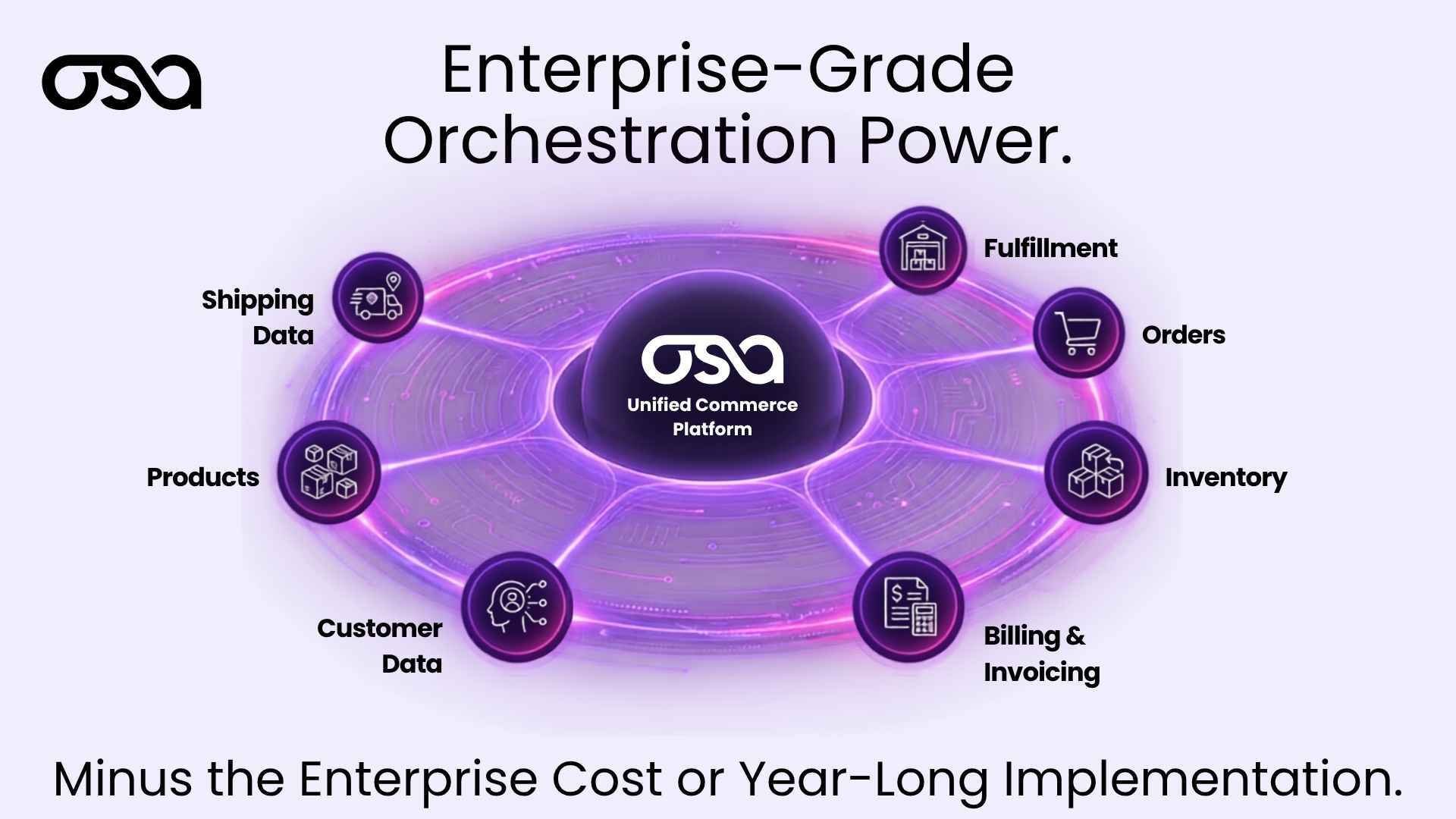
Now is the time to decide if your order lifecycle is either orchestrated by one unified system or broken across five. Stop paying the integration tax and losing clients to onboarding delays and billing disputes. Choose enterprise orchestration without the enterprise timeline.
